
- Vinyasa yoga is a style of yoga in which you move continuously from one posture to the next, so the practice flows as a connected sequence. It's the most widely practised style of yoga in the world today.
- The word "vinyasa" is Sanskrit for "to place in a special way", from nyasa ("to place") and vi ("in a special way"), meaning conscious, deliberate movement.
- A "vinyasa flow" is a continuous sequence of postures joined by smooth transitions.
- Vinyasa has no fixed sequence and no single governing body, so no two classes are alike. This is why it's also called "flow yoga".
- It evolved from Ashtanga Yoga as a more flexible, accessible version, tracing back to Krishnamacharya and his student K. Pattabhi Jois.
I have taught vinyasa for more than a decade and built our yoga teacher training in Sri Lanka around it. Yet I still think it's one of the most misunderstood styles of yoga. So let's clear it up, in plain language, from someone who teaches this every day. If you are starting further back, our guide to what yoga is covers where the whole practice came from.
What Is Vinyasa Yoga?
Vinyasa yoga is a style of yoga in which you move continuously from one posture to the next, so the practice flows rather than stopping and starting at every pose.
Instead of holding a single posture and then setting up the next one, you link the postures into a smooth, connected sequence. Movement and breath move together as you go, which gives the practice its flowing, continuous quality and turns a series of separate poses into a single expression.
Because the sequences aren't fixed, no two vinyasa classes are ever quite the same. This sets it apart from Ashtanga, which repeats one set series every time.
One thing to know: many vinyasa teachers cue the breath to lead the movement. You'll hear "inhale, reach up… exhale, fold." Breath first, body follows, it's a hallmark of the style. We do it a little differently at Lanka Yoga: we teach movement to lead, and the breath to follow naturally, on our trainings and on our retreats in Sri Lanka alike.
Vinyasa Meaning: What Does the Word Mean?
"Vinyasa" is Sanskrit, usually broken into nyasa, meaning "to place," and the prefix vi, meaning "in a special way." Together, vinyasa means "to place in a special way".
That definition matters on the mat. Vinyasa isn't about throwing your body from shape to shape; it's about placing each part of yourself deliberately and moving with control. The "special way" is the conscious, connected quality of the movement itself.
You'll also hear "take a vinyasa" used more narrowly, meaning one specific mini-sequence: plank, lowering through Chaturanga, opening into Upward-Facing Dog, and pressing back to Downward-Facing Dog. So the same word names both the overall style and that particular transition.
Vinyasa Yoga Definition
Here's a clean vinyasa yoga definition you can take away:
Vinyasa yoga is a dynamic style of postural yoga that sequences postures into a continuous, flowing practice, with movement and breath moving together rather than holding each pose in isolation. It has no single fixed sequence and no central governing body, which is why it's also known as "flow yoga."
What Is a Vinyasa Flow?
A vinyasa flow is the chain of postures and smooth transitions that makes up the moving part of a vinyasa class.
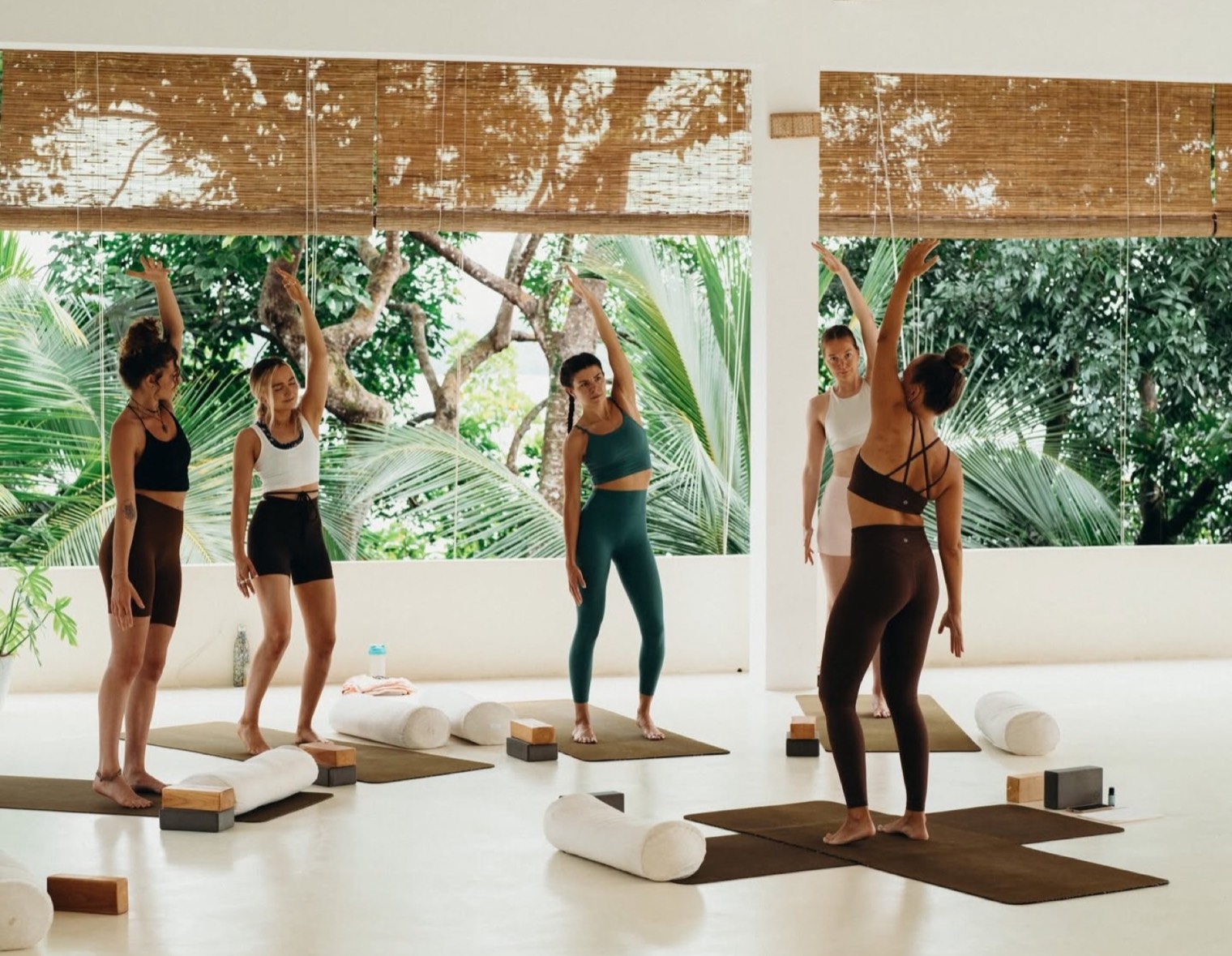
A typical class structure follows a recognisable arc:
- Centring: a few minutes to settle and arrive on the mat.
- Warm-up: gentle joint and spinal movement to prepare the body.
- Sun salutations: flowing sequences that build heat and establish the movement rhythm.
- Standing and balancing work: the dynamic heart of the class.
- Peak and cool-down: a challenging shape or two, then gentler postures.
- Savasana: final rest.
The transitions matter as much as the postures. Learning to move well between shapes, with control and stability, is where the real skill of vinyasa lives.
Where Did Vinyasa Yoga Come From?
Vinyasa is a modern practice with deep roots. Much of postural yoga traces back to Tirumalai Krishnamacharya, often called the father of modern yoga, who taught in the palace of Mysore in early-twentieth-century India. His student K. Pattabhi Jois developed Ashtanga Vinyasa Yoga, built on set sequences repeated in a fixed order.
Ashtanga's intensity made it inaccessible for many, so teachers began adapting it, softening the demands, adding warm-ups, and freeing the sequences from one fixed order. That more flexible, creative version became vinyasa yoga.
One name to untangle while we're here. Jois took the word ashtanga from Patanjali's eight limbs of yoga, literally "eight limbs", but his set sequences are a modern asana practice, not that eight-part path. Same word, two very different things.
The key point: unlike the classical schools, vinyasa has no single guru, no central guidebook, and no governing body. Over time it's borrowed bits from everywhere, elements from Pilates, dance, and even martial arts.
That freedom is great. It keeps the practice fresh and evidence-based. But it has a downside too: with no shared standards, a sloppy class can be unbalanced or even unsafe. This is why our vinyasa yoga teacher training grounds the creativity of flow in a modern understanding of anatomy, movement and breath.
What Are the Benefits of Vinyasa Yoga?
Yoga is not magic. Like any exercise, the benefits aren't guaranteed, and a lot depends on how it's taught. So here's an honest look at what a good vinyasa practice can offer:
- Usable strength and mobility: moving actively through lots of poses can build real strength and keep your joints healthy, not just bendy. That distinction is worth its own guide: see mobility vs flexibility.
- Better circulation: smooth, flowing movement can help move blood and lymph around the body, which supports the heart rather than straining it.
- A calmer mind: when the movement is slow and mindful, vinyasa can turn into a kind of moving meditation, nudging you toward "rest and digest".
- Less stress and tension: practised with ease (not force), it can leave you more relaxed than when you started.
Now the honest bit. A fast, pushy class can do the opposite: raising stress, encouraging overstretching, and leaving your nervous system more wound up than when you arrived, and loading the joints in ways that aren't always kind to the body. Plenty of vinyasa leans hard on deep stretching and big, sweaty effort, and that isn't automatically "good for you". The benefits come from how you move, not just how much.
And no style is complete on its own. I tell students to mix in some strength work and some slow, restful movement too. A balanced body comes from variety, not repetition.
Is Vinyasa Yoga Good for Beginners?
Yes, with the right class. Vinyasa is beginner-friendly when the teacher gives clear instruction and modifications and keeps the pace appropriate. The continuous movement actually helps many beginners, because you're not held in demanding postures for long.
My advice: start with a class that's actually labelled for beginners. "Vinyasa" covers a huge range, from gentle and slow to fast and sweaty, and walking into an advanced flow on day one is a quick way to feel lost (or get hurt). Look for classes marked "beginner," "slow flow," or "foundations," and build up from there. Our guide to getting better at yoga covers what building up should actually look like.
How Is Vinyasa Different From Other Styles?
| Style | How it compares to vinyasa |
|---|---|
| Ashtanga | Same fixed sequence every class; vinyasa varies it. Vinyasa grew out of Ashtanga. Not to be confused with the eight limbs of yoga, which share the name. |
| Hatha | Slower, holds individual postures; vinyasa is the dynamic, flowing sibling. See our full hatha yoga vs vinyasa comparison. |
| Power yoga | A vigorous, fitness-oriented branch of vinyasa. All power yoga is vinyasa; not all vinyasa is power yoga. |
| Yin | Slow and passive, holding poses for minutes; vinyasa is its active, moving counterpart. See our full yin yoga vs vinyasa comparison. |
Thinking About Going Deeper?
For most people, vinyasa is simply a joyful, sustainable way to move and feel better. But at some point, you might start wondering why it works. That spark is often the first step toward becoming a yoga teacher.
If that's you, our vinyasa teacher training is one of the most rewarding ways to deepen your practice, whether or not you ever plan to teach. It's the difference between following a flow and truly understanding one.
FAQs about Vinyasa Yoga
What is vinyasa yoga in simple terms?
Vinyasa yoga is a style of yoga where you move continuously from one posture to the next, connecting them into a smooth, flowing sequence instead of holding each pose separately. Movement and breath move together as you go, which is why it's often called "flow yoga".
What does vinyasa mean?
Vinyasa is a Sanskrit word usually translated as "to place in a special way," from nyasa ("to place") and vi ("in a special way"). In practice it means moving consciously and deliberately from one posture to the next.
What is a vinyasa flow?
A vinyasa flow is a continuous sequence of postures joined by smooth transitions. The term describes both the flowing style of a whole class and a specific transition: moving from plank through Chaturanga to Upward-Facing Dog and back to Downward-Facing Dog.
Is vinyasa yoga good for beginners?
Yes, but start with a class that's labelled "beginner," "slow flow," or "foundations." Vinyasa ranges from gentle to very advanced, so the right class matters. The steady movement suits new students, since you're never stuck in a tough pose for long, and tell your teacher you're new.
What's the difference between vinyasa and Ashtanga yoga?
Ashtanga follows the same fixed sequence in every class, while vinyasa varies its sequences so no two classes are alike. Vinyasa developed as a more flexible, accessible evolution of Ashtanga.
Does vinyasa yoga help you lose weight?
It can play a part. Vinyasa is more active than many yoga styles, so it can support a healthy, active lifestyle. But it's best seen as one piece of a balanced routine, not a quick fix on its own.
Final Thoughts
Vinyasa yoga is, at heart, beautifully simple: link the postures together, move continuously, and pay attention to how you get from one shape to the next. Everything else builds on that one idea.
What keeps me teaching it is that vinyasa meets you where you are, gentle or powerful, meditative or athletic, a weekly class or the start of a lifelong path. Roll out a mat and see where the flow takes you.