
A great yoga class rarely happens by accident. Behind the calm of a well-taught session is a thoughtfully built yoga sequence.
Whether you're a new teacher planning your first class, a trainee learning to sequence, or a home practitioner wanting to structure your own flow, this guide breaks down exactly how a yoga sequence is built. You'll learn what sequencing is, the Block Structure method we teach at Lanka Yoga, the Synergy movement principles that keep every sequence safe, and five ready-to-use flow ideas you can teach today.
What Is a Yoga Sequence?
A yoga sequence is the deliberate order in which postures (asanas) are arranged within a class or practice. Rather than a random collection of poses, a sequence has a logical progression. It prepares the body gradually, moves through a purposeful build, and winds down toward rest. Asana is only the third of the eight limbs of yoga, but it's the limb most classes are built around, and sequencing is how you build it well. Our guide to what yoga is explains how asana came to dominate a far older practice.
Think of it like a piece of music. There's an opening, a rise in intensity, a peak, and a resolution. Good yoga sequencing is the craft of arranging postures so that each one prepares the body for the next, reduces the risk of injury, and creates a coherent experience for the student.
Sequences can be organised around many themes: a peak pose, a body area (hips, shoulders, spine), an energetic quality (energising or calming), or a philosophical intention. What they all share is intention.
Why Yoga Sequencing Matters
Sequencing is one of the most important skills a yoga teacher develops, and for good reason. A well-built sequence:
- Keeps students safe, warming the right muscles and joints before demanding postures
- Builds intelligently, each pose earns the next, so peak postures feel accessible rather than forced
- Balances the body, pairing efforts with counterposes so students leave feeling even, not strained
- Delivers an experience, a clear beginning, middle and end that leaves students calm and complete
Anyone can name poses. Sequencing is the art of putting them in an order the body can trust.
The Blocks of a Well-Built Yoga Sequence
At Lanka Yoga we teach a specific, teacher-friendly way to build a class called Block Structure. A rigid, minute-by-minute script falls apart the moment a real class doesn't cooperate; pure improvisation wanders into long tangents. Block Structure is the middle path, you organise the class into a handful of bite-sized blocks around a peak pose, giving you enough structure to feel confident and enough space to adapt in the moment.
A standard 60-minute class breaks into six 10-minute blocks:
| Phase | Purpose | Example poses |
|---|---|---|
| 1. Centering and Warm-up | Arrive, settle the breath, set an intention. Mobilise spine and major joints | Seated breathing, child's pose, cat–cow, gentle twists, thread the needle |
| 2. Sun salutations | Build heat, link breath to movement | Surya Namaskar A & B |
| 3. Standing poses | Develop strength, balance and stability | Warrior I & II, triangle, chair |
| 4. Peak / focus | The most challenging shape the class builds toward | Crow, dancer, wheel, splits |
| 5. Cool-down | Release effort, open hips, calm the system | Pigeon, seated forward fold, supine twist |
| 6. Savasana | Integrate and rest | Final relaxation |
This structure is a template, not a rulebook. A restorative or Yin class might spend almost all its time in phases 1, 2 and 5, while a strong power class leans into 2, 3 and 4. Once you understand the arc, you can bend it intelligently.
4 Principles of Good Yoga Sequencing
1. Warm before you demand
Never ask the body for a deep expression of a posture cold. If your peak pose is a deep backbend, you warm the spine, shoulders and hip flexors first. If it's a hip opener, you mobilise the hips gradually through the standing series.
2. Progress gradually
Move from simple to complex and from stable to challenging. Introduce the components of a hard pose in easier shapes first, so the peak feels like an arrival rather than a leap.
3. Counterpose your efforts
Every strong action deserves a balancing one. Backbends are followed by gentle forward folds or twists; deep twists by neutral shapes. Counterposing is what lets students leave feeling balanced rather than tweaked.
4. Sequence both sides evenly
Whatever you do on the right, do on the left. It sounds obvious, but losing track of symmetry is one of the most common beginner-teacher errors.
The Peak-Pose Method
The most reliable way to build a class is to sequence backwards from a peak pose. Here's the method we teach trainees:
- Choose your peak pose, the shape the whole class points toward.
- Break it down into its physical demands (e.g. open hips, strong core, flexible spine, shoulder mobility).
- Find preparatory poses that safely develop each of those demands.
- Arrange those prep poses in order of increasing intensity along the blocks above.
- Add counterposes and a cool-down that releases everything the peak asked for.
Work backwards from the destination, and the path almost sequences itself. This single method will carry you through most classes you'll ever teach.
5 Yoga Flow Ideas You Can Teach Today
Below are five ready-made yoga flow sequence ideas for different intentions. Treat them as starting points, adjust the pace, hold times and difficulty to suit your students. Learning one of them by heart is also one of the most reliable ways of getting better at yoga yourself. The same poses shape a class very differently in a slow, held hatha versus a flowing vinyasa. Repeat every standing posture on both sides.
1. Morning Energising Flow
- Seated breathing + intention (2 min)
- Joint movements, wrists, shoulders, hips
- Spinal warm-up (spinal movements) x 5
- Sun Salutation A x 3
- Sun Salutation B x 2
- Warrior II → Extended Side Angle → Triangle
- Chair pose → forward fold
- Standing twist for release
- Bridge pose x 2
- Supine twist, both sides
- Short Savasana (3 min)
2. Beginner Full-Body Flow
- Child's pose (settle the breath)
- Gentle joint movements + spinal warm-up
- Downward dog → gentle walk-out
- Half Sun Salutations x 4
- Low lunge, both sides
- Warrior I → Warrior II
- Tree pose (balance)
- Seated forward fold
- Reclined bound-angle pose
- Savasana (5 min)
3. Hip-Opening Flow
- Centering + gentle hip circles
- Joint movements (hips, spine) → downward dog
- Sun Salutation A x 3
- Low lunge → lizard pose
- Warrior II → Goddess pose
- Wide-legged forward fold
- Peak: Pigeon pose, both sides (hold 8–10 breaths)
- Seated wide-angle fold
- Happy baby
- Savasana (5 min)
4. Core & Strength Flow
- Breath + core activation (navel to spine)
- Joint movements, wrists, shoulders (prep for load)
- Sun Salutation B x 3
- Plank → forearm plank holds
- Boat pose x 3
- Warrior III (balance + strength)
- Chair pose with twist
- Peak: Crow pose attempts
- Bridge or wheel
- Reclined twist + knees to chest
- Savasana (4 min)
5. Gentle Evening Wind-Down
- Comfortable seat + long exhales
- Seated side bends and gentle twist
- Slow spinal movements (spinal warm-up)
- Child's pose (hold)
- Low lunge with a soft backbend
- Standing forward fold
- Reclined pigeon, both sides
- Legs up the wall (5 min)
- Supine twist
- Long Savasana (6–8 min)
Save these yoga sequence ideas and adapt them to your students' level and the time you have. Over time you'll develop an instinct for which shapes prepare which.
The wind-down sequence is doing something specific, and it helps to know what: legs up the wall, long exhales and an unhurried Savasana are all ways of moving students out of fight-or-flight. Understanding the mechanism makes it much easier to sequence for it deliberately.
Common Sequencing Mistakes to Avoid
- No warm-up. Jumping into demanding poses cold is the fastest route to strain.
- A peak with no build. If nothing prepares the peak pose, most students can't safely access it.
- Forgetting the second side. Always mirror left and right.
- No counterposes. Deep backbends or twists with no release leave the body unsettled.
- Rushing Savasana. Rest is where the practice integrates, protect those final minutes.
- Too many peaks. One clear focus beats five competing hard poses.
- Sequencing for depth instead of control. Taking students deeper than they can actively hold builds passive range nothing protects, which is the argument in mobility vs flexibility.
Where Teachers Really Learn to Sequence
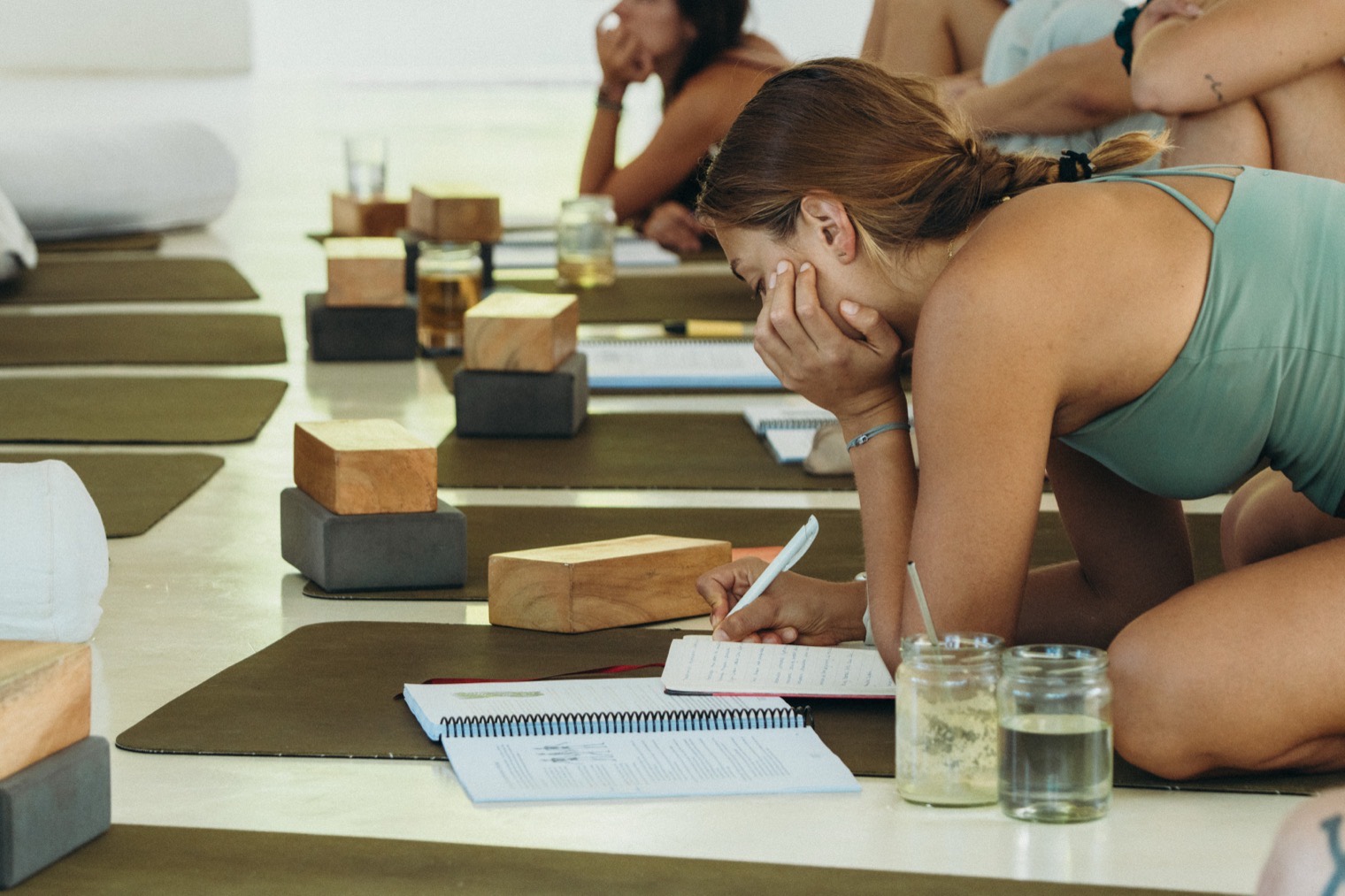
Reading about sequencing is a start, but the skill is built through practice, feedback and repetition. On a quality yoga teacher training in Sri Lanka or anywhere else, sequencing is taught as a core discipline, you learn the theory, then plan and teach real classes to fellow trainees while an experienced teacher gives you feedback on flow, timing, cueing and safety.
At Lanka Yoga, our 200-hour Vinyasa training devotes dedicated modules to sequencing and practicum, so graduates are able to confidently design and lead their own classes. If you're serious about teaching, hands-on sequencing practice is where the real growth happens.
Frequently Asked Questions
What is the correct order of a yoga sequence?
Most well-built classes follow the same block structure: centering, warm-up, sun salutations, standing poses, a peak or focus pose, cool-down, and Savasana. You adjust the timing for the style and class length, but the progression from gentle to challenging to restful stays the same.
How do you sequence a yoga class for beginners?
Keep it simple and well-warmed. Use foundational poses, move slowly, introduce one clear focus rather than several hard peaks, and allow plenty of time in warm-up and rest. The Beginner Full-Body Flow above is a good template.
What is the peak-pose method of sequencing?
You choose a peak pose, break it into its physical demands, then build the class backwards.
How long should a yoga sequence be?
Any length works as long as the block structure is respected. A 20-minute flow can move quickly through each phase, while a 75- or 90-minute class allows longer holds, a fuller build and a longer Savasana. Scale the phases, not the structure.
Do I need to be a certified teacher to build a sequence?
No, home practitioners can absolutely structure their own flows using the principles here. But if you want to teach others safely and confidently, a Yoga Alliance registered teacher training gives you the supervised practice and feedback that turn sequencing theory into real skill.
Final Thoughts
A yoga sequence is far more than a list of poses. It's an intentional journey that warms, builds, peaks and restores. Once you understand the block structure and the handful of principles that keep it safe, you can build classes that feel cohesive, balanced and genuinely good to move through.
Start with the flow ideas above, sequence backwards from a peak, respect the warm-up and the rest, and trust the structure. The more you practise, the more the poses will start ordering themselves.