
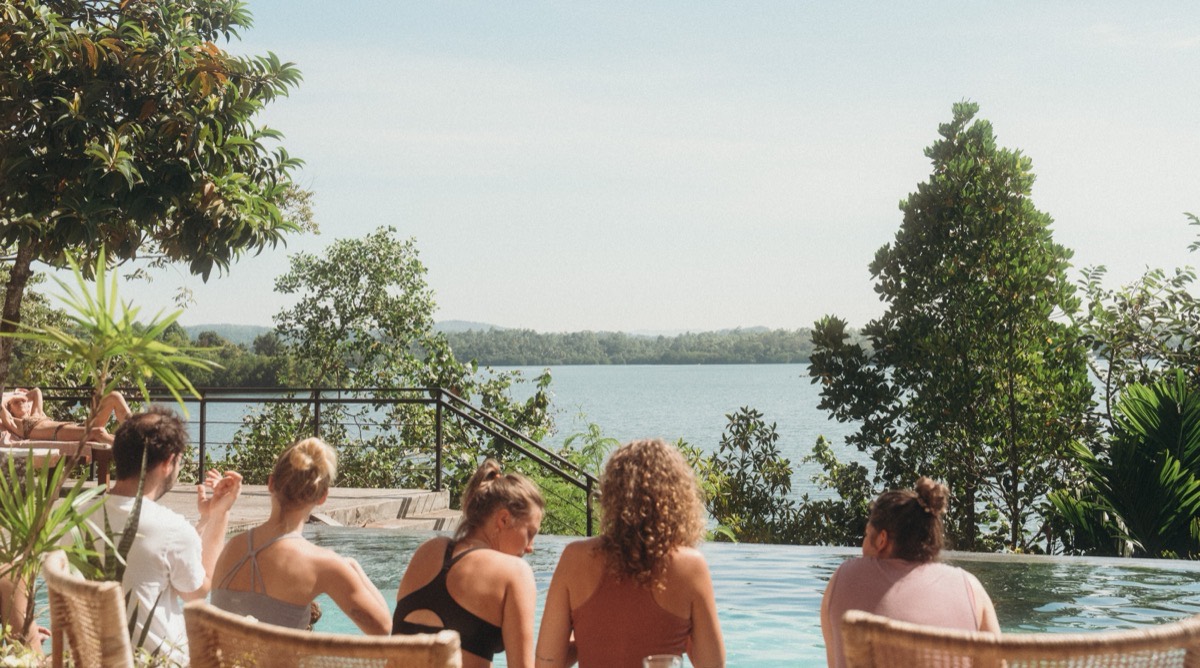
- A retreat is a dedicated period of time away from everyday life, usually in a quiet or natural setting, spent resting, reflecting and focusing on your wellbeing rather than your to-do list.
- The word itself means "to withdraw" or "step back", historically from military and religious life, and today from the noise of work, screens and routine.
- Retreats come in many forms: wellness, yoga, meditation, silent, spiritual, detox and nature retreats among them. A wellness retreat is the broad, health-focused kind.
- The real value isn't luxury; it's the chance to shift your nervous system out of "fight-or-flight" and into rest, which is hard to do at home.
I've run retreats for years, and the question I hear most from first-timers is simply: what is a retreat, really? People picture anything from a silent monastery to a luxury spa. So let's clear it up in plain language.
What Is a Retreat?
A retreat is a set period of time (usually a few days to a couple of weeks) that you step away from ordinary life to rest, reflect and focus on yourself, typically in a calm or natural setting with some kind of guided structure.
That's the core of it. Unlike a normal holiday, a retreat is intentional: it's built around slowing down and doing you good, rather than sightseeing or ticking off attractions. Most retreats combine three things: a change of environment, a supportive structure (classes, workshops, meals, rest), and a theme or purpose (yoga, meditation, wellness, creativity, faith).
Retreat Meaning: Where the Word Comes From
The retreat meaning is right there in the word: to retreat is to withdraw, to pull back, to step away. It comes from the Latin retrahere, "to draw back".
Historically it had two homes. In military life, a retreat was a strategic withdrawal, pulling back to regroup and recover strength. In religious life, a retreat was a period of seclusion for prayer, silence and reflection, stepping away from the world to turn inward. Both meanings survive today: a modern retreat is a deliberate withdrawal from the noise (work, screens, obligations) so you can rest, reset and come back stronger. You're not running away from your life; you're stepping back from it so you can return to it better.
Why Go on a Retreat?
Here's the honest, physiological reason that retreats work.
Modern life keeps many of us stuck in a low-grade "fight-or-flight" state: always reachable, lightly stressed, rarely fully switched off. A good retreat removes the triggers (notifications, deadlines, decisions) and fills the space with practices: yoga, breathwork, meditation, walks, real rest. That nudges the body the other way, toward what's often called "rest and digest". That shift is where recovery, better sleep, clearer thinking and genuine relaxation come from. Breathwork and meditation in particular have been shown to calm the stress response and lower the load on the nervous system.
You don't need a retreat to produce that shift, and it's worth knowing how it works before you book one. Our guide to calming your nervous system covers the physiology and nine practices that do it, most of which take minutes.
The catch is that this shift is genuinely hard to achieve at home, surrounded by the very things that keep you switched on. A retreat's real gift is a protected environment where slowing down is the whole point.
Common reasons people go on a retreat:
- To de-stress and properly rest, beyond a normal weekend
- To reset habits: movement, sleep, eating, screen time
- To deepen a practice like yoga or meditation
- To reflect, get perspective, or navigate a life transition
- To disconnect from devices and reconnect with themselves and others
Types of Retreats
"Retreat" is an umbrella term. Here are the most common kinds and what each centres on.
| Type of retreat | What it centres on |
|---|---|
| Wellness retreat | Overall wellbeing, movement, nutrition, rest, nature and spa |
| Yoga retreat | Daily yoga, breathwork and meditation, often with workshops |
| Meditation / silent retreat | Stillness and mindfulness, sometimes in full silence |
| Spiritual / religious retreat | Prayer, reflection and inner work |
| Breathwork retreat | Breathing practices and nervous-system regulation |
| Detox / fitness retreat | Clean eating, cleansing and physical training |
| Nature / adventure retreat | Hiking, the outdoors and unplugging |
Plenty of retreats blend several of these. A yoga retreat is usually also a wellness retreat, and both often include meditation and time in nature — our own yoga retreats in Sri Lanka sit across all three. If you want the training rather than the rest, that is a different thing again: a yoga teacher training in Sri Lanka is a certification course, not a holiday.
What Is a Wellness Retreat?
A wellness retreat is the broadest, health-focused type: a getaway designed to improve how you feel in body and mind.
The emphasis is on balance and recovery, not endurance or performance. A good wellness retreat sends you home rested, not wrecked: sleeping better, moving more easily, and calmer than when you arrived. At Lanka Yoga, that's exactly the intention behind our wellness retreat in Sri Lanka, which is built specifically around calming the nervous system.
What Does a Retreat Agenda Look Like?
One of the most common first-timer questions is what you actually do all day. Most retreats follow a gentle, predictable retreat agenda, enough structure to help you switch off, enough space to rest. Here's a typical day at a yoga or wellness retreat:
| Time | Activity |
|---|---|
| 6:30 | Wake, herbal tea |
| 7:00 | Morning meditation or pranayama (breathwork) |
| 7:30 | Morning yoga or movement (~90 min) |
| 9:00 | Breakfast |
| 10:30 | Workshop, treatment, or free time |
| 13:00 | Lunch |
| 14:00 | Rest: nap, read, swim, spa, or explore |
| 16:30 | Afternoon session (yin/restorative yoga, breathwork or a talk) |
| 18:00 | Sunset practice or meditation |
| 19:00 | Dinner |
| 20:30 | Evening circle, then quiet / early night |
The exact agenda varies by retreat and style. A silent retreat has far less talking, an adventure retreat swaps studio time for trails. But the rhythm is similar: move, nourish, rest, reflect, repeat. That repetition is what lets your body and mind downshift over a few days.
A day like that quietly moves through several of the eight limbs of yoga: posture in the morning session, breathwork before it, and the sense-withdrawal and concentration that come naturally once the phone is away.
A note from my own experience: the best retreats build in genuine free time. If every hour is scheduled, it's a busy holiday, not a retreat. The gaps are where the rest actually happens.
What to Expect (and What Not to)
- Expect to slow down. The first day or two can feel restless as you decompress. That's normal, and it passes.
- Expect simple, nourishing food. Many retreats are vegetarian or vegan and alcohol-free.
- Expect community, but also solitude. You'll share meals and practices, and also have time alone.
- Don't expect a party or a packed sightseeing tour. That's a holiday. A retreat is quieter and more inward by design.
- Don't expect to "fix" everything. A retreat is a reset and a beginning, not a one-time cure.
How to Choose the Right Retreat
Ask yourself a few honest questions:
- What do I actually need, rest, movement, stillness, or a challenge? Match the type to the need.
- What's the pace? Look at the agenda: is there real downtime, or is it wall-to-wall?
- How experienced are the teachers, and how big is the group? Smaller groups mean more support.
- Does the setting help me switch off? Nature and a phone-light environment do a lot of the work.
- Is it all-inclusive? Knowing food and accommodation are handled is part of what lets you relax.
FAQs: What Is a Retreat?
What is the meaning of a retreat?
A retreat is a period of time you spend away from normal life to rest, reflect and focus on your wellbeing. The word means "to withdraw" or "step back," and that's the idea: stepping back from the noise so you can recover and reset.
What is the difference between a retreat and a holiday?
A holiday is usually about doing and seeing: sightseeing, activities, indulgence. A retreat is about slowing down and turning inward, with a supportive structure (yoga, meditation, rest) built around your wellbeing. You often come home from a holiday needing a rest; you come home from a good retreat already rested.
What is a wellness retreat?
A wellness retreat is a health-focused getaway that combines several practices: movement or yoga, nourishing food, rest, nature and often spa or breathwork. The goal is balance and recovery rather than performance.
What happens on a typical retreat day?
Most retreats follow a gentle agenda: morning meditation or breathwork, a yoga or movement session, nourishing meals, a workshop or free time in the afternoon, an evening wind-down, and an early night. There's structure to help you switch off, plus real free time to rest.
How long is a retreat?
Retreats range from a weekend to two weeks or more. Three to seven nights is the sweet spot for most people, long enough to properly unwind and feel the benefits, short enough to fit real life.
Do I need experience to go on a retreat?
No. Most wellness and yoga retreats welcome all levels, including complete beginners. Look for one that says it's suitable for beginners, and tell the organisers about any injuries or concerns beforehand.
Final Thoughts
Strip it back and a retreat is simply this: dedicated time away to step back, rest and reset. Whether it's wellness, yoga, silence or nature, the thread is the same: leaving the noise behind so you can return to yourself, and then to your life, in better shape.
If that's what you're looking for, our yoga and wellness retreats in Sri Lanka on the shores of Koggala Lake are built around exactly this, whether you want to reset your nervous system, dive into breathwork, or flow through a Synergy Vinyasa retreat. Sometimes the most productive thing you can do is step back. And if you want to explore the island around your stay, our guide to the best things to do in Sri Lanka covers where to go, region by region.