

- The national dish of Sri Lanka is rice and curry: rice ringed by three to five curries, plus sambol, mallung and papadam, all eaten mixed together.
- Sri Lankan food is distinct from Indian food. More coconut, darker roasted spice, sour goraka and raw relishes rather than creamy gravies.
- Breakfast is its own cuisine here: hoppers, string hoppers, kiribath and coconut roti, usually with dhal and pol sambol.
- Traditional Sri Lankan food is naturally plant based. Most of a rice and curry spread contains no dairy and no meat.
What makes Sri Lankan food different from Indian food
The two share a spice cabinet and almost nothing else about how a plate is built.
| Sri Lankan food | Typical Indian food | |
|---|---|---|
| Fat and body | Fresh coconut milk, first and second extraction | Ghee, cream, yoghurt, nut pastes |
| Spice treatment | Curry powder dark roasted until almost black | Spices more often bloomed raw or lightly toasted |
| Souring agent | Goraka, tamarind, lime | Tamarind, yoghurt, amchur |
| Signature aromatics | Pandan leaf, curry leaf, lemongrass, cinnamon | Bay, asafoetida, garam masala |
| The relish | Sambols, served raw and fiery | Chutneys and pickles, often cooked or sweet |
| How it is served | Everything at once, mixed by hand on the plate | Often more separated, breads to scoop |
Coconut grows everywhere here, so it does the work dairy does elsewhere. And true cinnamon is native to this island, which is why the spice is warm and delicate rather than hot.
Rice and curry: the national dish of Sri Lanka
Ask anyone here what the national dish of Sri Lanka is and you get the same answer: rice and curry. Red or white rice sits in the middle of the plate, ringed by three to five curries, with a sambol, a green mallung and a papadam around the edge.
A good spread usually includes:
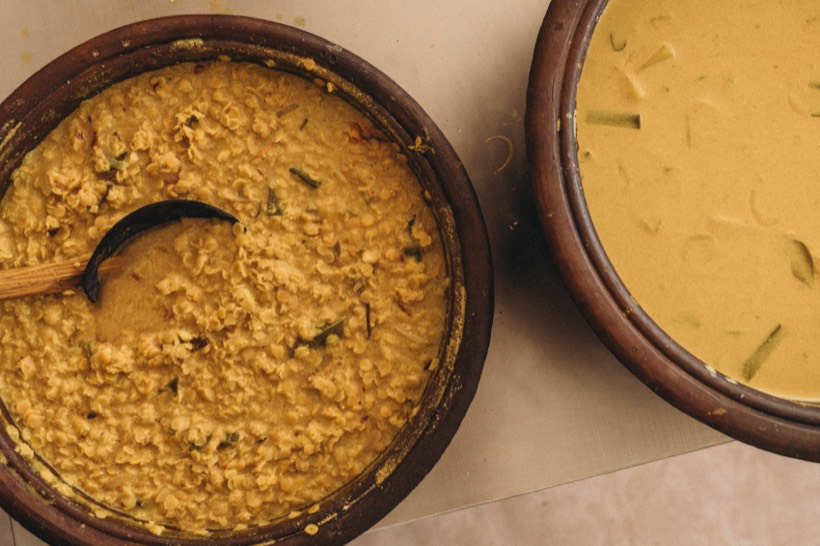
- Parippu: dhal simmered soft in coconut milk with turmeric, curry leaf and pandan.
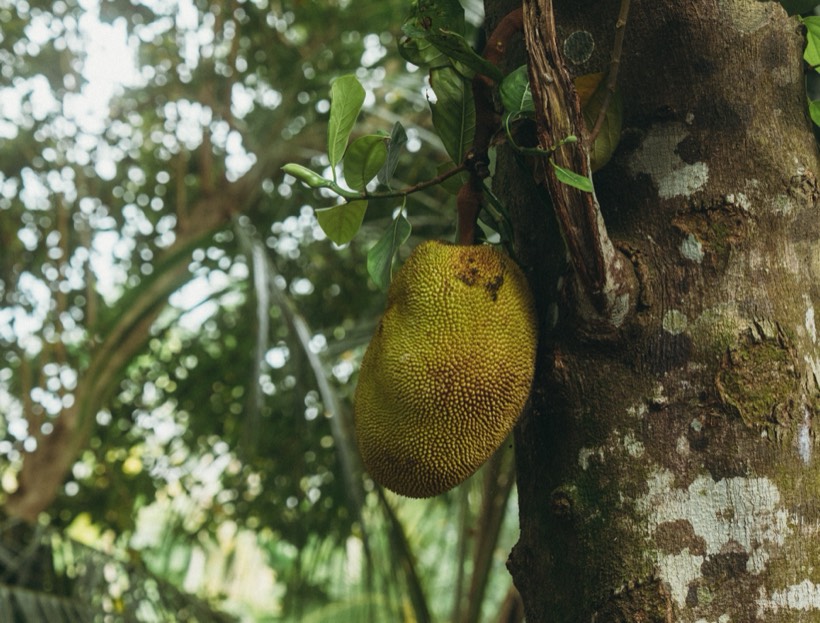
- Polos: young green jackfruit stewed in dark roasted spice until it pulls apart like slow cooked meat.
- Wambatu moju: eggplant fried then pickled with mustard, sugar and vinegar.
- Kiri hodi: a thin, pale coconut gravy with turmeric and lime, poured over everything to loosen the plate.
- Ala thel dala: potato tempered with chilli, onion and mustard seed.
- Malu ambul thiyal: sour fish curry from the south, preserved with goraka until it is almost dry and black.
The point is the combination. No single curry is meant to carry the meal, and locals mix them with the fingertips of the right hand before each bite, so that no two mouthfuls taste the same. That is also why traditional Sri Lankan food travels badly onto a set menu.
Breakfast is its own cuisine
Food in Sri Lanka does the unusual thing of making breakfast the most distinctive meal of the day.
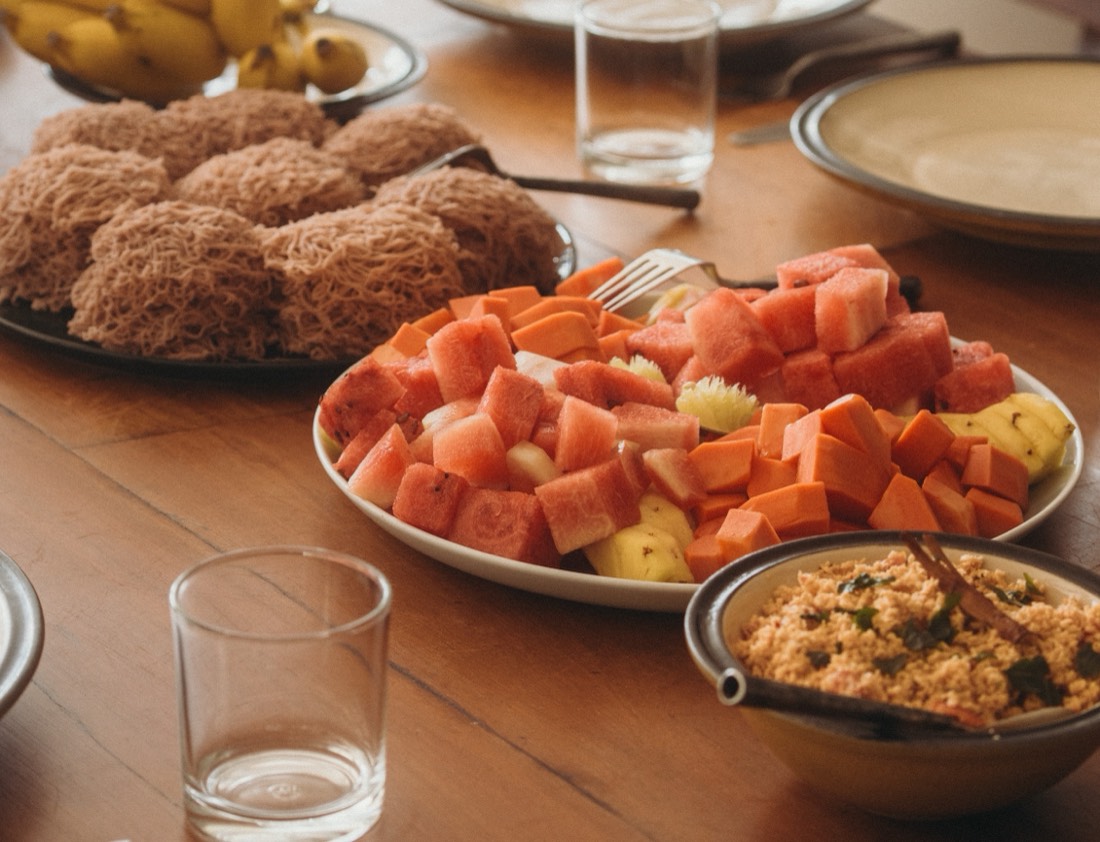
- Hoppers (appa): a batter of fermented rice flour and coconut milk swirled around a small round pan so it sets crisp at the edges and soft in the centre. An egg hopper has an egg dropped in as it cooks.
- String hoppers (idiyappam): nests of steamed rice flour noodles, served in stacks with dhal, pol sambol and kiri hodi.
- Kiribath: rice cooked in thick coconut milk, pressed and cut into diamonds. Served on the first of the month, at new year, and whenever something is being celebrated.
- Pol roti: a flatbread of flour and grated coconut, cooked dry on a griddle, eaten with lunu miris.
The sambols that do the real work
Sambols are the reason a plate of Sri Lankan dishes tastes bright rather than heavy. They are raw, they are made fresh, and they are the first thing a cook here is judged on.
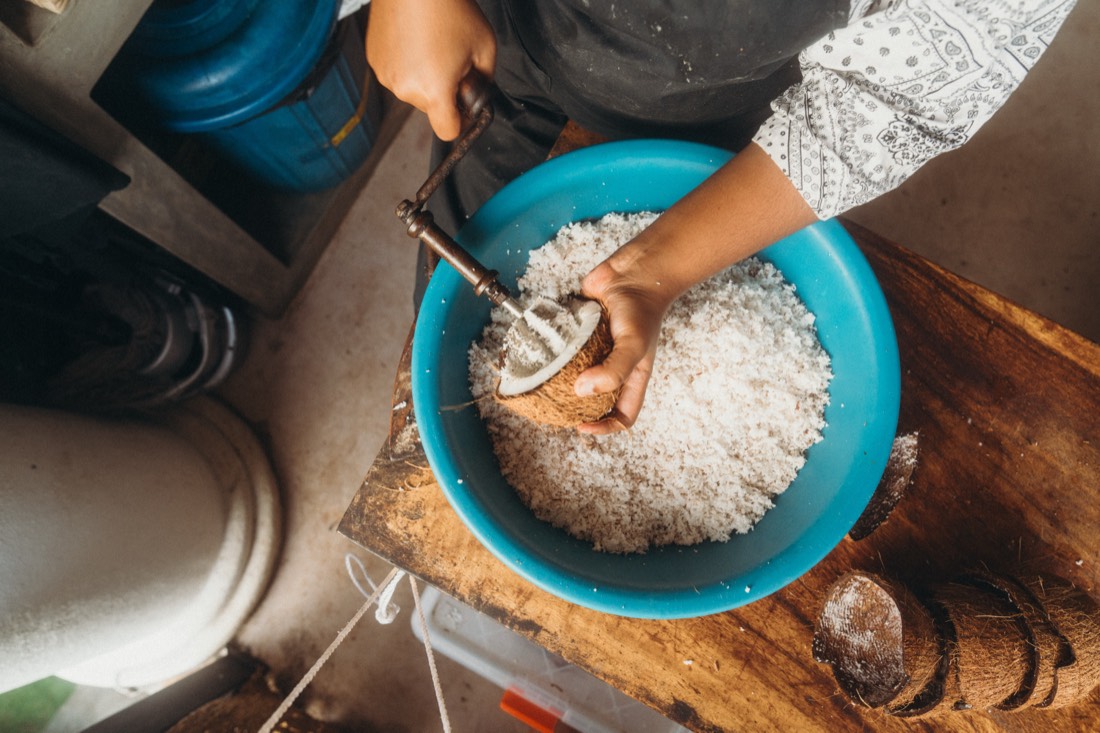
Pol sambol is grated fresh coconut pounded with red chilli, lime, red onion and, in most homes, maldive fish. Lunu miris is the fiercer relative: chilli, onion, lime and salt, no coconut. Seeni sambol goes the other way, onions cooked slowly with tamarind and jaggery into something dark and sweet. Gotu kola mallung is not a sambol but sits beside them, a raw salad of finely shredded pennywort with coconut and lime.
The best Sri Lankan food to look for
Once you are past rice and curry, this is the shortlist we give guests.
| Dish | What it is | Where to find it best |
|---|---|---|
| Kottu roti | Flatbread chopped on a hot griddle with vegetables, egg and spice | Any evening street stall, heard before it is seen |
| Lamprais | Rice cooked in stock with meatballs and sambol, baked in banana leaf | Colombo, from the Dutch Burgher tradition |
| Jaffna crab curry | Crab in a fiercely dark northern curry powder | Jaffna and the north |
| Isso wade | Lentil fritters topped with whole prawns | Galle Face Green and coastal roadsides |
| Ambul thiyal | Dry, sour, black fish curry preserved with goraka | The south coast, our own stretch of it |
| Watalappan | Steamed coconut custard with jaggery and cardamom | Everywhere, especially around Ramadan |
| Curd and treacle | Buffalo curd with kithul palm treacle | Roadside stalls, sold in clay pots |
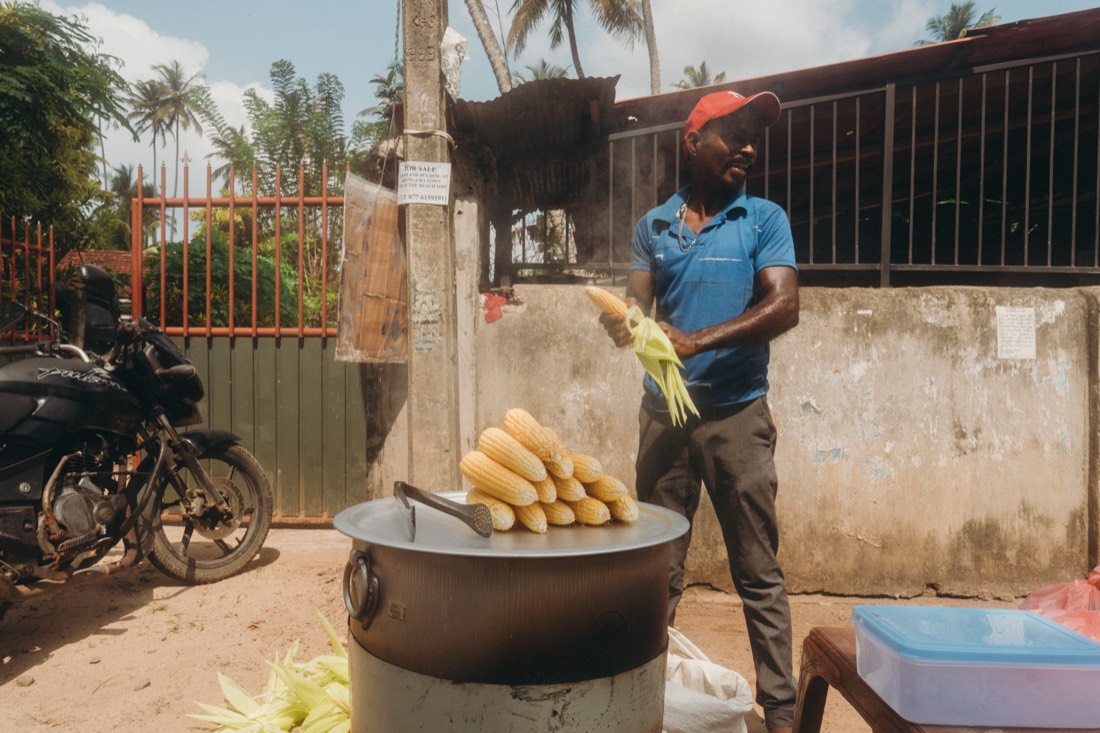
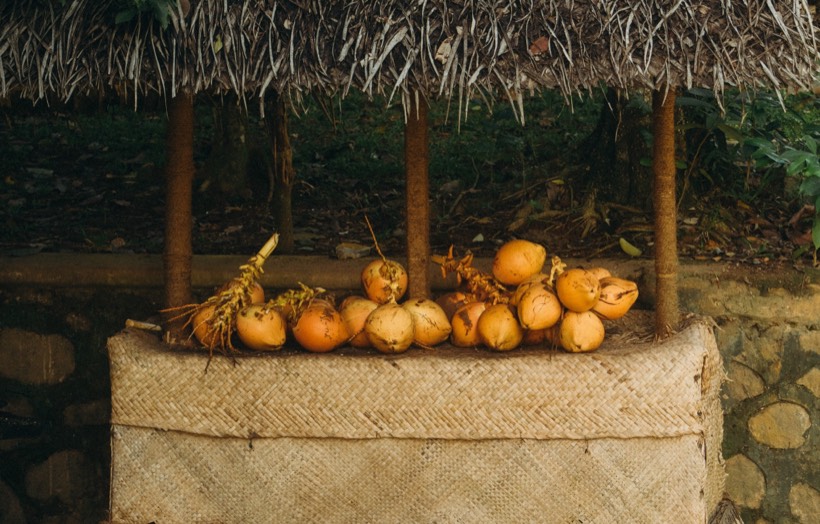
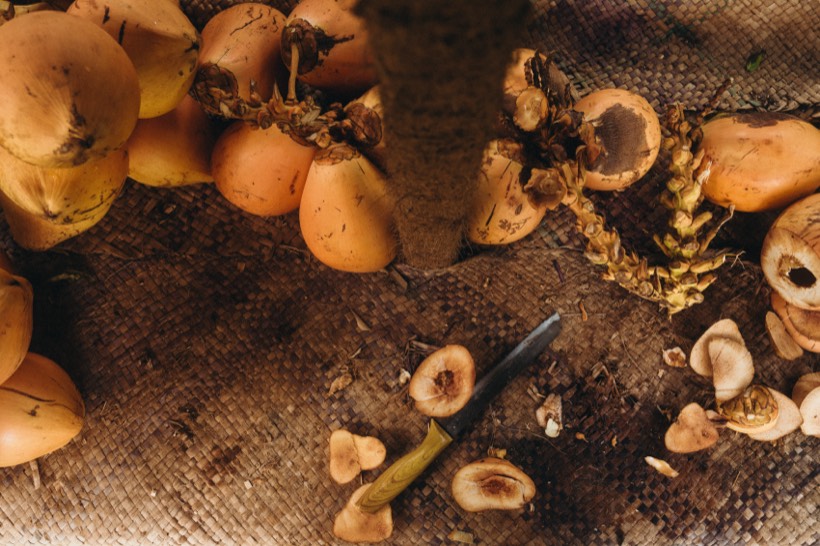
Two drinks belong on that list. Thambili, the orange king coconut, is sold from carts for around a hundred rupees and is better hydration than anything you can buy in a bottle. And Ceylon tea is worth drinking where it grows, up in the hill country, taken plain rather than drowned in milk.
Sri Lankan food for vegetarians and vegans
This is the part that surprises people most. Traditional Sri Lankan food is largely plant based already. Coconut milk replaces dairy in almost every curry, and a normal home spread of dhal, jackfruit, eggplant, greens and sambol contains no animal products at all. The two things to ask about are maldive fish, a dried tuna flake stirred into many sambols, and the fish or chicken curry that often sits in the middle of a restaurant plate.
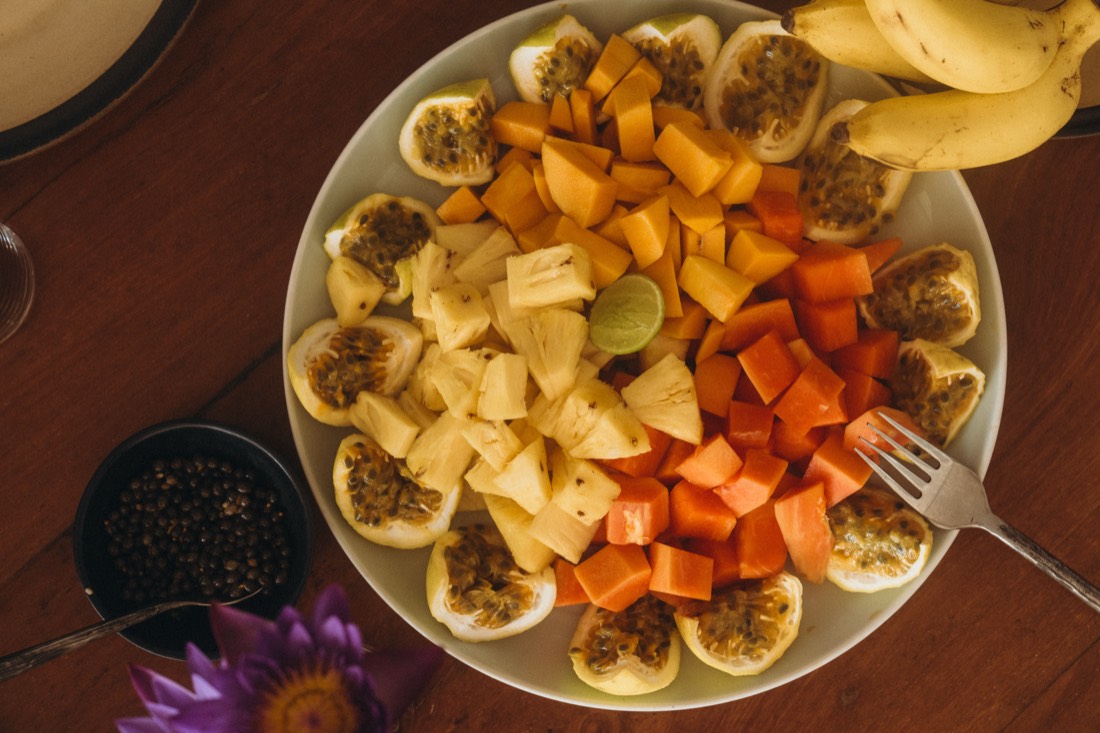
Our own kitchen is fully vegan, which started as an environmental decision and turned out to cost us nothing in flavour. The line we hear most often from guests, and one that made it into more than one review, is that you would never tell it was vegan.
How to eat it without regretting it
- Say "less spicy" when you order. Local heat is a level above tourist heat, and nobody will be offended.
- Eat with your right hand if you can. Mix a small amount of rice with two or three curries, then gather it with the fingertips. It genuinely tastes different.
- Eat rice and curry at lunch. It is the main meal here.
- Cool it with curd, not water. Water spreads chilli oil around your mouth. Buffalo curd, coconut or plain rice puts it out.
- Follow the crowd at midday. A busy roadside place with a queue of tuk tuks outside is a better signal than any rating.
- Carry cash. Roadside food and lunch packets are almost always cash only, as we note in our guide to the top things to do in Sri Lanka.
How we feed people at Lanka Yoga
Eating this way for a week is one of the quiet reasons people leave a retreat lighter than they arrived. Our menu follows the island rather than an international kitchen: garden greens, dhal, jackfruit, whatever the fruit forest is giving that month, with fresh sambol at every meal.
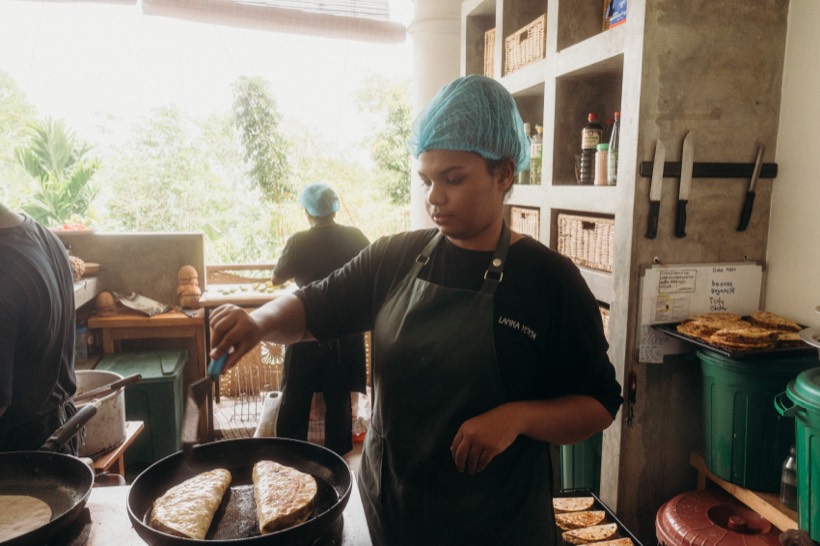
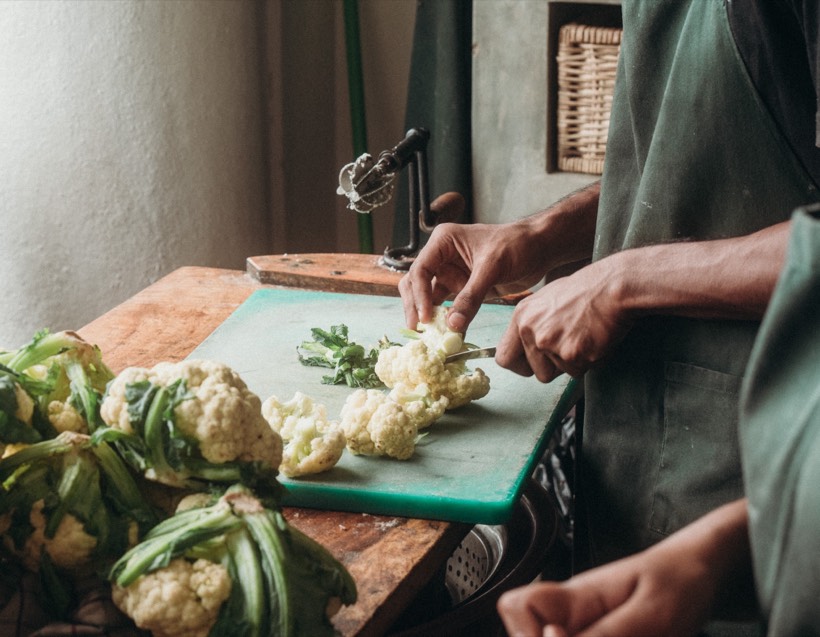
If you want that as part of a longer reset, our yoga retreats in Sri Lanka all include full board, and the Wellness Retreat builds the food into a week aimed at stress and sleep rather than pampering. Trainees on our 200 hour yoga teacher training in Sri Lanka eat the same food for a month, which is long enough to notice what it does to digestion and energy. If the whole idea is new to you, start with our guide to what a yoga retreat is.
Frequently asked questions
What is the national dish of Sri Lanka?
Rice and curry. A serving of rice is surrounded by three to five curries, such as dhal, jackfruit, eggplant and a fish or vegetable curry, with sambol, mallung and papadam. It is eaten mixed together rather than in courses.
Is Sri Lankan food the same as Indian food?
No. Sri Lankan food uses far more coconut, roasts its curry powder until it is almost black, sours dishes with goraka, and serves raw sambols alongside. The result is brighter, hotter and less creamy than most Indian cooking.
What is the best Sri Lankan food to try first?
A rice and curry lunch packet, then a kottu roti in the evening and an egg hopper for breakfast. Those three cover most of what makes the cuisine what it is.
Is food in Sri Lanka very spicy?
Often yes, especially away from tourist areas. Ask for less spicy when you order, and cool the heat with buffalo curd, coconut or plain rice rather than water.
Is Sri Lankan food good for vegetarians and vegans?
Very. Most of a traditional spread is naturally plant based, since coconut milk does the job of dairy. Check for maldive fish, a dried tuna flake stirred into many sambols.
What should I eat for breakfast in Sri Lanka?
Hoppers, string hoppers, kiribath or coconut roti, all served with dhal and pol sambol. Breakfast here is savoury and it is the meal most worth getting up for.
Key takeaway on Sri Lankan food
Sri Lankan food rewards curiosity more than budget. The best plate you eat here will almost certainly come wrapped in paper, from a place with no sign, for the price of a coffee at home.
Order rice and curry rather than a single curry. Eat breakfast the way it is served here. Ask for less chilli on day one and more by day five. Do that and you will taste an island cuisine that stands entirely on its own.