
Hi, I’m Stefan. I run Lanka Yoga on Koggala Lake, and I’ve been training yoga teachers for over a decade — more than 500 graduates, across five continents.
Choosing a 200-hour yoga teacher training is one of the bigger decisions a serious yoga student makes. It’s three to four weeks of your life, a few thousand euros, and it sets the foundation for how you’ll teach for the rest of your career. Get it right and the training stays with you for years. Get it wrong and you finish with a certificate but no real confidence.
Sri Lanka is a brilliant place to train — the south coast in particular has become one of the world’s strongest hubs for yoga teacher training. But that means there are a lot of options, and the quality varies enormously. The aggregator websites that show up first on Google list everything, good and bad, side by side. So how do you actually choose?
This guide walks through the things I’d look for if I were picking a YTT today, having spent twelve years on the other side of the equation.
I won’t tell you which school to pick. I will tell you what to ask, what to look for, and what to walk away from.
1. Is the school actually based in Sri Lanka, or flying in?
Both can produce excellent trainings. But they produce them in different ways.
Year-round Sri Lanka schools tend to have stronger venues, deeper local relationships, settled operations, and a teaching team that’s genuinely embedded in the community. The food is better, the logistics are smoother, and when something goes wrong on the ground, someone knows what to do.
Fly-in trainings can be excellent if the lead teacher is genuinely senior and the local partner is professional. They can also be patchy — borrowed venues, last-minute substitutions, a teaching team that doesn’t quite gel because they only meet twice a year.
The question to ask the school: “Is this where you live and work, or do you visit?” And then: “Who runs operations on the ground?”
There’s no right answer. There’s a right answer for you. (For a broader perspective, see 10 real-world reasons to do your yoga teacher training in Sri Lanka.)
2. Who is actually teaching, and how much time will you spend with them?
This is the single most important question, and the one most schools dance around.
A 200-hour course with one experienced lead teacher giving you 150+ hours of direct contact will produce a different teacher to one with a rotating cast of guest teachers each appearing for a day or two.
Single lead teacher trainings build deep coherence. You learn one voice properly. The downside is exposure — you only see one way of teaching.
Multi-teacher trainings give you breadth and exposure to different lineages. The downside is depth — none of the teachers know you well by the end.
In my experience, the format that consistently produces the strongest graduates is a clear, obvious lead trainer who delivers the bulk of the teaching, supported by a small team of senior teachers who handle specific specialist modules — anatomy, philosophy, sound, business of yoga, etc. You get one voice setting the through-line of the training, so the experience is coherent and easy to follow. The supporting teachers add depth in their areas of expertise without fragmenting the overall arc. You finish the training knowing you were really taught, not just exposed to a rotating cast.
What you want to avoid is the worst of both worlds: a “lead” teacher who only shows up for a few days, plus a stream of assistants doing the actual delivery. If the marketing puts a famous teacher’s face on the website but they’re only there for the opening ceremony, that’s a red flag.
The questions to ask:
- Who is the lead trainer, and how many hours will they personally teach?
- Who are the assistant teachers? What’s their experience and qualification?
- What’s the lead trainer’s personal practice and teaching history?
If a school can’t answer those clearly, look elsewhere.
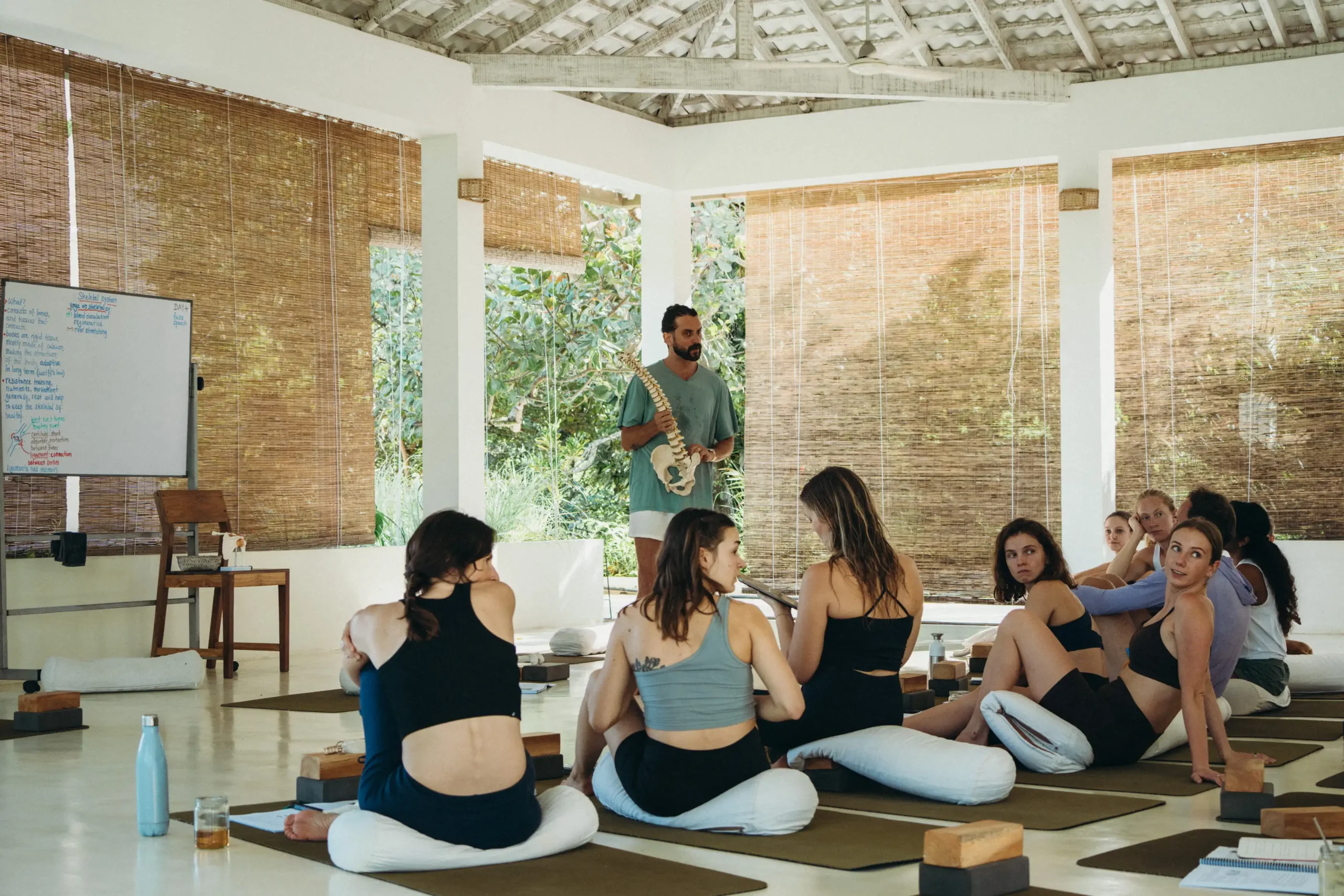
3. What’s the group size?
Anything over 25 students starts to compromise the personal feedback you need to actually become a teacher. Above 30, you’re in lecture-hall territory, and the value of in-person teacher training drops sharply.
The best trainings I’ve seen run with 15-20 students per cohort. That’s small enough for the lead teacher to know everyone’s name, body, and teaching style by the end. It’s also small enough that you actually get hands-on practice teaching real people, not just observing.
If a school doesn’t publish their cohort size, ask. If they’re cagey about it, that tells you something.
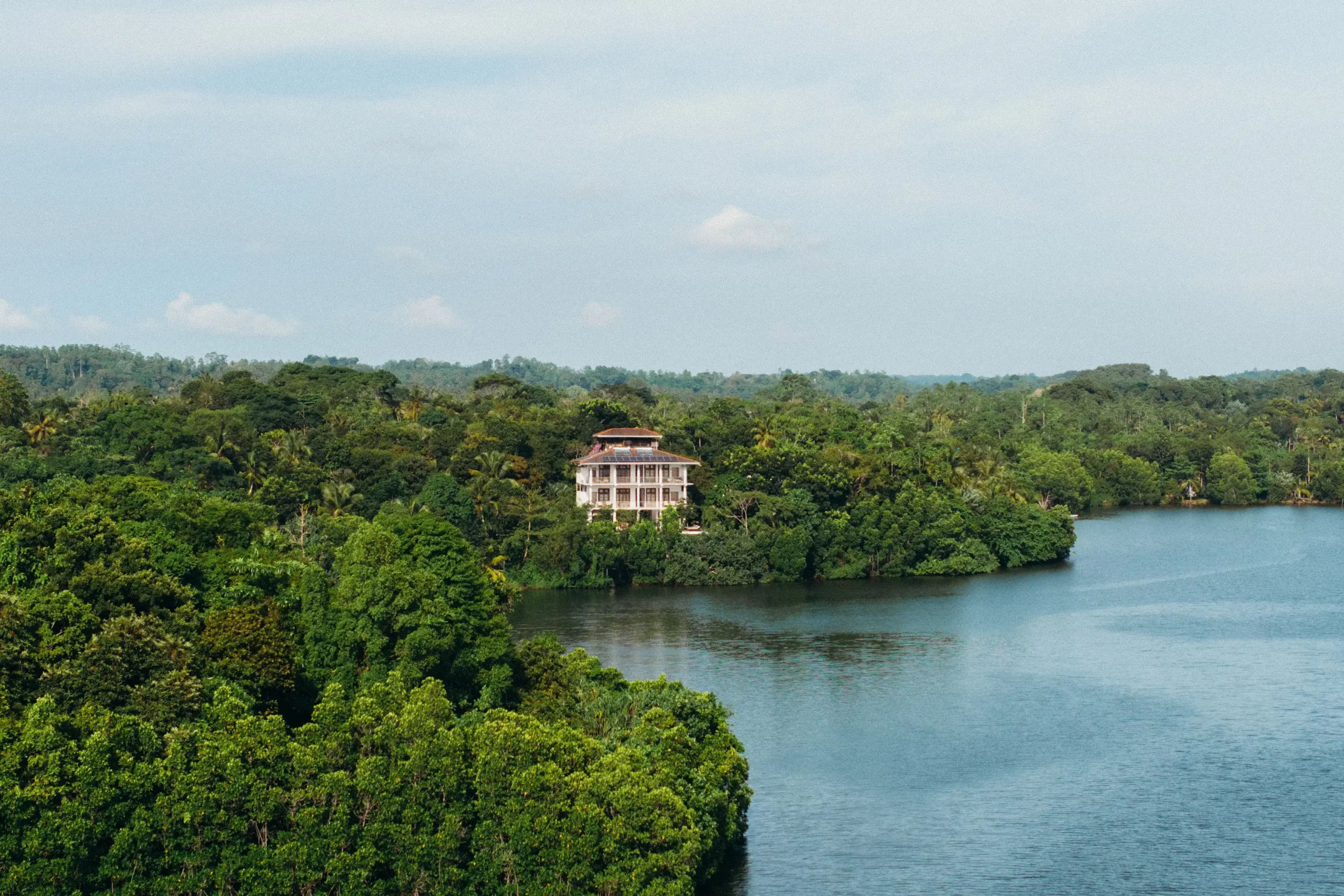
4. Is the venue purpose-built for yoga, or is it a hotel?
This matters more than people realise.
Purpose-built yoga venues are designed by people who care about the practice. Floors, light, ventilation, acoustics, the relationship between practice space and rest space — these things shape your experience without you noticing them. You walk in, you settle, and the space supports the work.
Hotel-based trainings vary wildly. Some hotels in Sri Lanka have brilliant yoga shalas built for the purpose. Others repurpose a function room or yoga deck that wasn’t really designed for full-day teacher training intensives.
Walk through the venue photos slowly. Look at the floor — is it sprung wood, or tiles? Look at the ventilation — does it have airflow, or just air-con? Look at where you’ll eat, sleep, and rest. Is it the same building as the practice space, or is there a five-minute walk between?
These aren’t dealbreakers, but they shape three to four weeks of your life. They’re worth examining.
5. What approach is the training actually built on?
Less “what style” and more “what’s the foundation?”
Every good yoga teacher training is built on something — a methodology, a lineage, a teaching framework, a particular reading of the tradition. Iyengar, Ashtanga, Yoga Synergy, classical Hatha, somatic-led, philosophy-first, trauma-informed. The label matters less than whether the school can articulate clearly what their approach is, where it comes from, and why they teach the way they do.
“Multi-style” is the most overused phrase in YTT marketing. Sometimes it means a thoughtful integration of approaches built on a coherent underlying methodology — Vinyasa for movement, Yin for recovery, philosophy threaded through both, anatomy underpinning all of it. That’s a real training.
Other times it means a buffet — a week of Vinyasa, a week of Yin, a few days of Ashtanga, a sprinkle of Pranayama, an afternoon of Sound Healing — with no through-line. You leave with exposure to lots of things and mastery of none.
The question to ask: “What is your training built on, and why?” If the school can answer that in a few clear sentences with confidence, you’re in good hands. If the answer is marketing-speak (“transformative journey,” “deep dive,” “find your inner teacher”), keep looking.
Read the curriculum carefully too. If a school can tell you, hour by hour, what you’ll actually be doing across all 21 days — and the structure builds on itself rather than jumping between unrelated topics — that’s a good sign.
The honest version is always more compelling than the marketing version.
6. Course length, contact hours, and the honest 200-hour question
Most reputable 200-hour YTTs run for 21-25 days. There’s a reason. Two hundred hours is a lot of material — anatomy, philosophy, teaching methodology, asana, meditation, business of yoga, ethics. Spreading it across three to four weeks gives the learning time to settle, your body time to absorb the practice, and your nervous system time to integrate everything.
Here’s something most schools won’t tell you openly: a lot of 200-hour trainings don’t actually deliver 200 hours. When you do the maths on the published schedules — subtract meal breaks, rest periods, days off, and free afternoons — many trainings come in well under 200 contact hours. Yoga Alliance allows a portion of those hours to be self-study or non-contact, which is fair, but some schools stretch that allowance further than they should.
A genuinely well-run 200-hour training will be transparent about how the hours break down. At Lanka Yoga we add online preparation hours before the in-person training begins, so the three weeks on the ground are actually used for teaching, practice, feedback, and integration — not for chewing through theory you could have read at home. That’s a model worth looking for: structured pre-course online work that genuinely adds to the in-person training, rather than substituting for it.
You’ll also see schools advertising 15-day “intensive” 200-hour trainings. Some make up the difference with online preparation modules. I’m not personally a fan of this format. Even with prep work, two hundred hours in 15 days means roughly 13 hours of in-person training every single day for two weeks straight. That’s not learning, that’s surviving.
If you genuinely cannot take three weeks off — career constraints, childcare, visa limits — then a compressed format with proper online prep can be workable. But it’s a compromise. Go in with eyes open.
The questions to ask any school:
- How many in-person contact hours do you deliver?
- How many of those are practice, vs. lecture, vs. self-study?
- Is there pre-course online content, and does it count toward the 200 or add to it?

7. Yoga Alliance accreditation — and what it actually means
Every reputable training I’d recommend is Yoga Alliance registered at the 200-hour RYT level. This is the global baseline. If a school doesn’t have it, walk away — your certification needs to be recognised internationally if you want to teach.
But Yoga Alliance accreditation is a floor, not a ceiling. It tells you the school meets minimum curriculum standards. It does not tell you the teaching is good, the venue is well-run, or the graduates can actually teach. There are excellent Yoga Alliance schools and there are mediocre Yoga Alliance schools.
So: use Yoga Alliance as a filter to rule things out, not as evidence to rule things in.
8. Talk to a graduate — actually do this
Every reputable school will connect you with a recent graduate if you ask. Not a glowing testimonial on the website — an actual person you can email or message who finished the training in the last twelve months.
If a school won’t connect you with a graduate, that tells you something. If they will, ask them three questions:
- What surprised you, good or bad?
- What would you have wanted to know before signing up?
- Are you actually teaching now, and if so, how prepared did the training make you feel?
The answers to these will tell you more in ten minutes than two hours on the school’s website.
9. Practical Sri Lanka stuff that doesn’t make it into most lists
A few things that catch people out:
The south coast is where most quality YTTs run. The teaching community is denser, the infrastructure is better, and it’s reachable from Colombo airport in two to three hours. Trainings inland or in the hill country can be excellent but are rarer and harder to assess from outside. For more on choosing between specific trainings, see choosing the right 200-hour YTT in Sri Lanka.
Monsoon timing matters. May to September is wet on the south coast. Most YTTs run from October to April for a reason. If a school is running through monsoon, it’s either inland or working around the weather — both can be fine, just ask.
Visa is straightforward. A standard tourist eVisa runs around USD 50 for 30 days, USD 75 for 60 days. Apply through the official Sri Lankan government site (eta.gov.lk is the legitimate one). Avoid third-party visa services charging mark-ups.
Total cost is more than the course fee. Beyond tuition, you’ll need flights, visa, travel insurance, a few extra days either side, and spending money for days off and meals not included. Budget realistically — a “€3,000 training” usually becomes €4,500-5,500 all in.
How to actually decide
Here’s the simplest filter I can offer:
- Decide on the approach first. Less “what style is taught” and more “what is this school’s actual approach to yoga, and what is it grounded in?” Some schools build their training on a specific methodology — Yoga Synergy, Iyengar, Ashtanga, classical Hatha, somatic-led, philosophy-first. Others draw from multiple traditions intentionally. Either can work, but understanding the foundation tells you whether the rest of the school’s choices will line up with how you want to teach.
- Look at the lead teacher, not the school. Find them on Instagram. Watch them teach. See if their voice resonates with you.
- Read the full curriculum. Hour-by-hour breakdown. If it’s vague, that’s a red flag.
- Talk to a graduate. Not a testimonial — an actual person.
- Trust your gut on the venue and the teacher. You’ll know.
The right training is the one that meets you where you are and takes you somewhere you want to go.
Related reading: If you want more on the teaching side, have a read of How to Plan a Yoga Class Using Block Structure. Or if you’ve started thinking about what comes after teaching, A Yoga Teacher’s Guide to Running Your First Retreat covers the practical side of running your own.
A note on Lanka Yoga
If you’re curious whether our 200-hour Yoga Synergy Vinyasa training is a fit for you specifically, here’s the honest version.
We run small cohorts (capped at 20) at a purpose-built lakefront shala on Koggala Lake. The training is built on the Yoga Synergy method developed by physiotherapists, so it’s anatomically grounded and movement-science based. I personally lead the bulk of the teaching across all 21 days, supported by a small team of senior teachers I’ve worked with for years.
The training suits you if you want to understand the why behind movement, you like clear thinking, and you want to teach real people in the real world. It’s not for you if you want a strongly devotional or chant-led experience — we lean toward the practical.
If you’d like to chat about whether it’s right for you, drop us a line — I’m happy to help, even if the answer ends up being a different school.
Good luck with the search.
Stefan
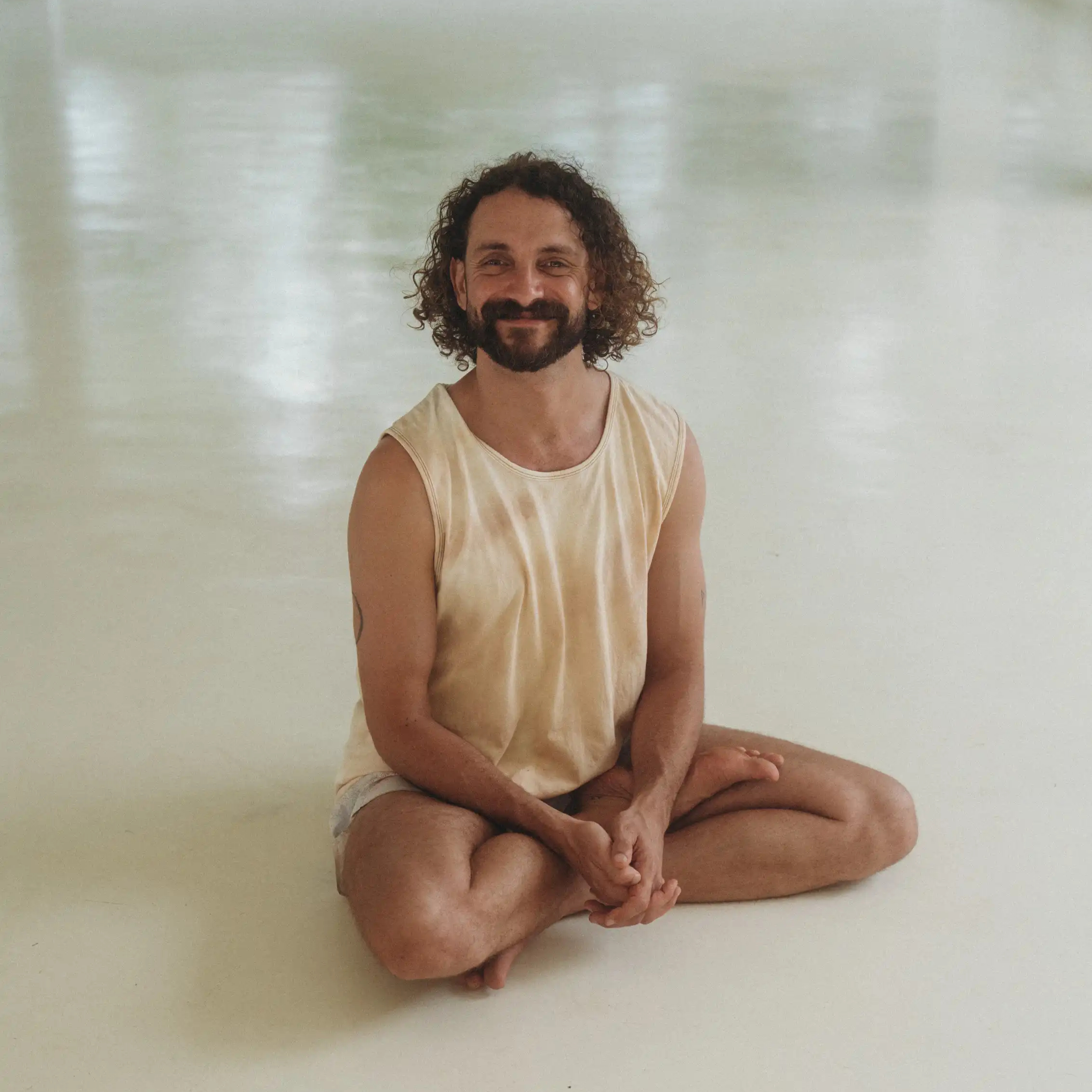
Written by
Stefan Camilleri
Stefan is the founder and lead trainer at Lanka Yoga on Koggala Lake, Sri Lanka. He’s been running yoga teacher trainings for over 10 years and teaches the Yoga Synergy method — an evidence-based approach to movement, anatomy, and breath.