Most people researching yoga teacher trainings assume the 200-hour is the default, and anything shorter is a watered-down version. That’s not really how it works.
A 100 hour vinyasa yin yoga teacher training isn’t a half-YTT. It’s a focused immersion, usually built around a specific style or pairing of styles. And for a lot of students, it’s a far more useful starting point than the full 200.
This is especially true when the training combines Vinyasa and Yin. Two styles that look opposite on paper, but cover most of what modern students actually need.
Here’s why the pairing works, why 100 hours of it often gives you more than you’d expect, and what to look for if you’re considering one.
Why Vinyasa and Yin work so well together
On paper, Vinyasa and Yin look completely opposite.
Vinyasa is dynamic. Breath-led movement. Heat, strength, coordination, cardiovascular demand, muscular engagement, transitions, rhythm.
Yin is slow. Long-held postures. Reduced muscular effort. Stillness, fascia stress, mobility, nervous system downregulation, patience.
But underneath the surface, they’re deeply complementary.
Vinyasa teaches you how to move energy. Yin teaches you how to settle it. Vinyasa builds strength and resilience in the muscular system. Yin targets connective tissue and joint mobility. Vinyasa develops focus through action. Yin develops focus through observation.
Together, they create a more complete practice. One that balances effort with ease instead of endlessly pushing toward more intensity.
That’s why students who only practise one style often hit a wall eventually. Runners eventually need mobility work. Hypermobile students eventually need strength. Fast-moving minds eventually need stillness.
A good vinyasa yin yoga teacher training helps you understand the relationship between all of it.
You don’t have to want to teach
One of the bigger myths about yoga teacher trainings is that they’re only useful if you actually want to teach.
That’s not really true anymore.
A lot of people join 100-hour trainings simply because they want to understand yoga properly for the first time. They’ve been going to classes for years but still don’t fully understand alignment, sequencing, breathwork, anatomy, or why certain poses feel the way they do.
Weekly classes can improve your practice, but they rarely explain the system underneath it. A training does.
You learn why Vinyasa classes are sequenced the way they are. Why some poses prepare the body for others. Why breath changes the nervous system. Why long Yin holds affect connective tissue differently from active stretching. Why some students need strengthening while others need releasing.
You stop copying shapes and start understanding practice. That’s usually the point where yoga becomes much more interesting.
Why 100 hours often makes more sense than 200
A full 200-hour teacher training is a big commitment. Time, money, energy, emotional bandwidth. And honestly, not everyone needs one straight away.
For many students, 100 hours is the sweet spot.
Long enough to immerse yourself properly in practice and philosophy. Short enough to stay manageable for people with jobs, families, or limited time away.
It also gives you a chance to test whether you actually enjoy training environments before committing to something larger. Some students do a 100hr, decide it’s enough, and that’s the right call. Others do it and immediately want to go further. Both are valid outcomes.
And because vinyasa yin yoga teacher training combines two styles rather than hyper-focusing on one, it tends to give a broader and more practical understanding of modern yoga overall.
You learn:
- How to build and understand Vinyasa sequences
- How Yin postures affect fascia and mobility
- Functional anatomy and joint movement
- Breathwork and nervous system regulation
- Meditation and mindfulness practices
- Teaching language and cueing
Even students with no intention of teaching usually come away practising more intelligently afterwards.

The nervous system piece most students don’t expect
This is the part many students don’t see coming.
Most people arrive at yoga because something in their system is overloaded. Stress, burnout, anxiety, chronic tension, emotional fatigue, physical tightness, nervous system dysregulation. Sometimes all at once.
Modern life keeps people permanently switched on.
Vinyasa helps discharge excess energy through movement and breath. Yin teaches the body how to tolerate stillness again. That combination matters.
One of the reasons students often feel so different after a 100 hour vinyasa yin yoga teacher training isn’t just because they learned more poses. It’s because they spent weeks moving between activation and regulation in a much more balanced way than everyday life usually allows.
For a lot of people, that’s the first time they realise yoga isn’t just exercise.
What sets a good training apart
Not all trainings are created equal.
Some are basically choreography courses with spirituality sprinkled on top. Others disappear so deeply into philosophy that students leave unable to teach or structure an actual class.
The best trainings balance both theory and application. You want a training that teaches not just what to do, but why you’re doing it.
A good program should help you understand:
- How to sequence intelligently
- How to adapt classes for different bodies
- The biomechanics behind movement and mobility
- The energetic and nervous system effects of practice
- The difference between muscular stretch and fascial loading
- How to teach safely without becoming robotic about alignment
Ideally it should also leave room for exploration rather than presenting yoga as one rigid system with one “correct” way of practising. The deeper you go into yoga, the clearer it becomes that bodies are wildly different. Good teaching adapts to that reality instead of ignoring it.
It’s worth checking that the training you’re considering is Yoga Alliance approved if you do eventually want to teach. Both 100hr and 200hr certifications sit within their framework, but they certify different things.
Why this combination is so popular right now
People are increasingly moving away from extreme approaches to fitness and wellness. Constant intensity is exhausting. But complete passivity doesn’t feel great either.
Vinyasa Yin sits in the middle. You get strength and softness. Effort and recovery. Movement and stillness. Structure and surrender.
That balance is why these trainings appeal to such a wide range of people. From newer students wanting to deepen their understanding, to experienced practitioners looking to balance years of strong practice with something slower and more sustainable.
And unlike more niche yoga systems, Vinyasa and Yin are two styles you’ll encounter almost everywhere in the modern yoga world. Understanding both gives you a much stronger foundation overall.
Whether you eventually teach or not, the experience tends to change how you practise permanently. You stop seeing yoga as individual poses or isolated classes and start understanding it as a complete system. One capable of building strength, mobility, awareness, resilience, and nervous system balance all at once.
That’s what makes a good vinyasa yin yoga teacher training different from simply attending classes for a few more years. It gives you the framework underneath the practice, not just the shapes.
A note on Lanka Yoga
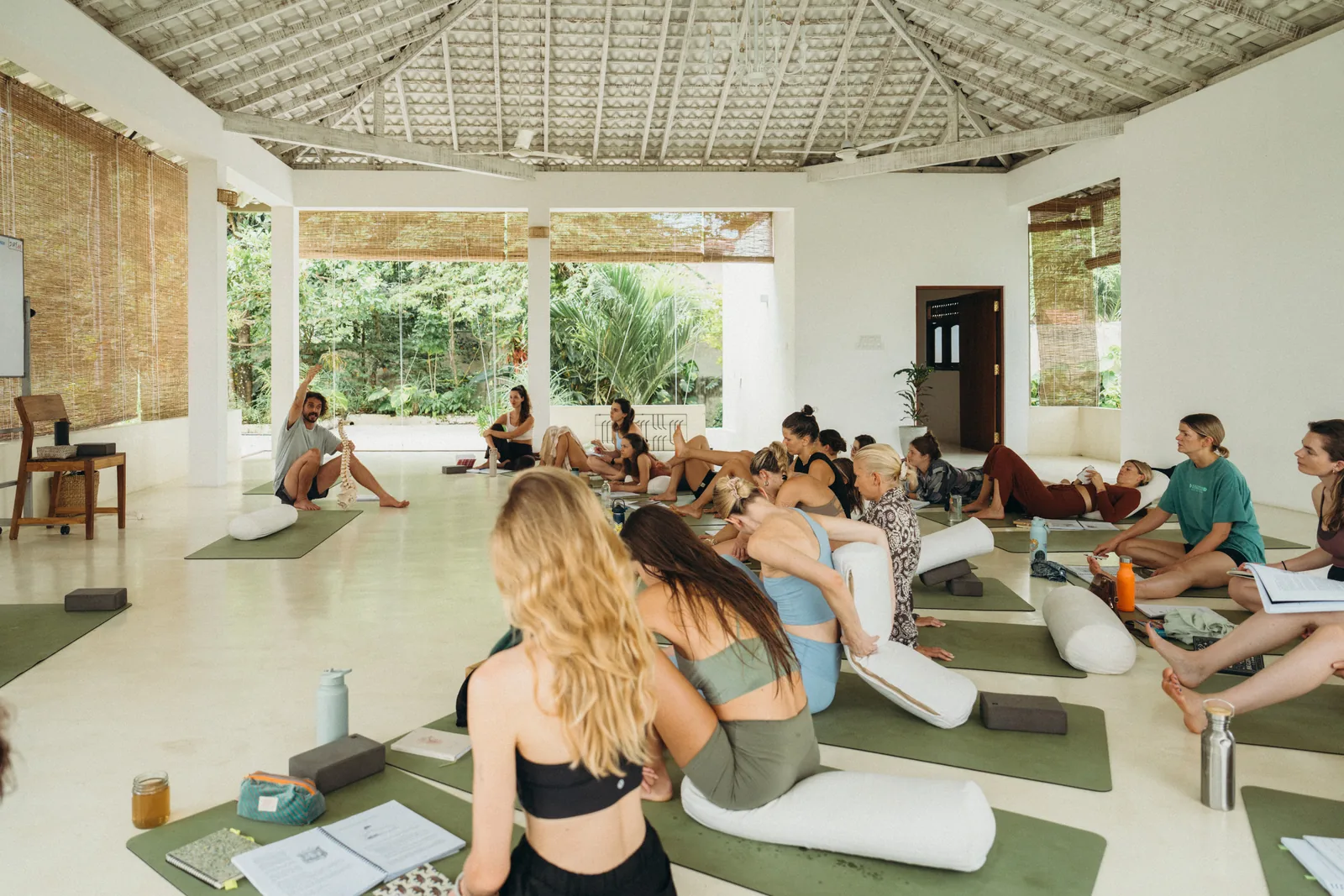
If you’re considering a 100hr training, we run one at Lanka Yoga on Sri Lanka’s south coast. It covers everything in this post: intelligent vinyasa sequencing, Yin methodology, functional anatomy, breathwork, meditation, and nervous-system-aware teaching.
It’s Yoga Alliance International certified, capped at 20 students, and runs over two immersive weeks at our shala on Koggala Lake.
You can see full details, dates, pricing, and accommodation options on the 100hr Vinyasa + Yin YTT page. If you’d rather see all our trainings first, the full YTT overview is here.
Jess
Written by
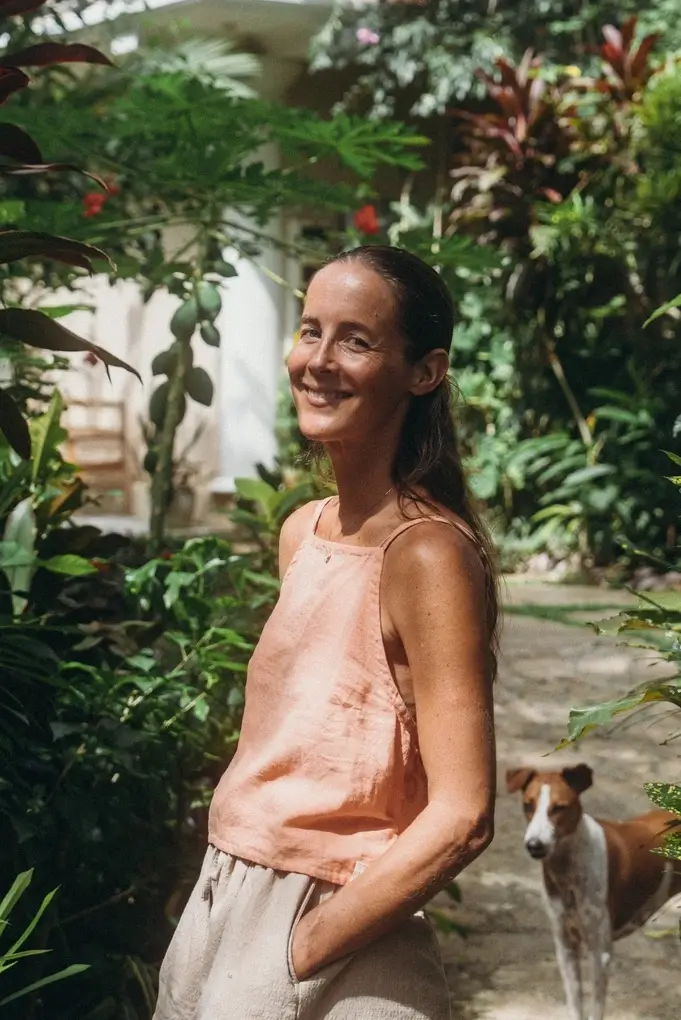
Jess Dezaux
Jess is the lead teacher of the 100 hour Vinyasa + Yin Yoga Teacher Training at Lanka Yoga on Koggala Lake, Sri Lanka. She pairs dynamic Vinyasa practice with the slower, fascia-focused work of Yin, with a strong emphasis on intelligent sequencing and nervous system balance.