
How long it takes to become a yoga teacher depends almost entirely on the format you choose. Most people start with a 200-hour yoga teacher training (YTT), the recognised international entry standard. An intensive, in-person course takes about three to four weeks full-time, while part-time and online formats spread the same 200 hours over two to twelve months. Once you receive your certificate, you can register and begin teaching straight away.
Below is a breakdown of the realistic timelines for each level of training, the factors that speed things up or slow them down, and how to think about the journey beyond your first certificate. If you'd prefer a broader overview of the whole pathway, see our companion guide on how to become a yoga instructor.
The 200-Hour Training: Your First Real Milestone
For almost everyone, the timeline to "becoming a yoga teacher" is really the timeline of a 200-hour YTT. This is the qualification most studios, gyms and yoga retreats look for, and it's the threshold for RYT 200 registration with Yoga Alliance. The number "200" refers to logged contact and training hours, not calendar time, which is exactly why the same certification can take a few weeks or a year.
There are three common ways those 200 hours get delivered:
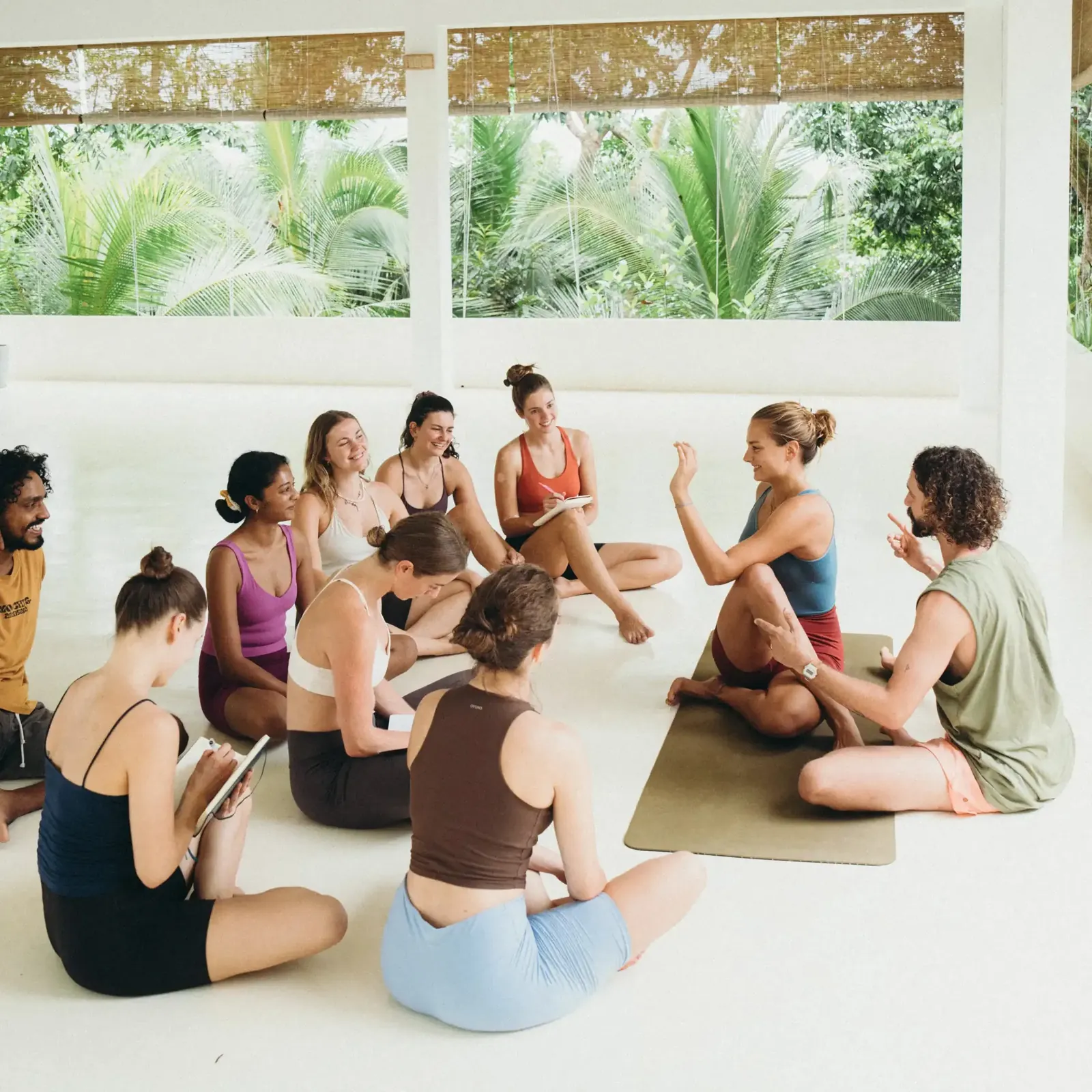
- Full-time immersive (3–4 weeks): Living and studying on-site, typically five to six days a week. This is the fastest route and the one we run at Lanka Yoga.
- Part-time, in-person (3–6 months): Evenings or weekends at a local studio, fitted around work and family.
- Online or self-paced (2–12 months): Maximum flexibility, but your pace — and the school's live-call requirements — determine the finish date.
200 is a number of hours, not a number of weeks. The format you choose is what turns those hours into a timeline.
Timelines at a Glance
Here's how the most common training levels compare, assuming you complete each one in sequence.
| Training Level | Full-Time | Part-Time / Online | What It's For |
|---|---|---|---|
| 100-hour foundation | 10–15 days | 1–3 months | An introduction; often a stepping stone toward the 200-hour. |
| 200-hour (RYT 200) | 3–4 weeks | 2–12 months | The standard entry qualification to start teaching. |
| 300-hour advanced | 4–6 weeks | 4–12 months | Deepens your skills after the 200-hour. |
| 500-hour (200 + 300) | — | 6 months–2 years | Combined total, usually with teaching experience in between. |
What Affects Your Timeline
Two people can enroll in the same course and finish months apart. These are the factors that make the biggest difference:
Format and schedule
This is the single largest variable. An immersive course removes daily distractions and packs the hours into consecutive days, which is why three to four weeks is realistic. A part-time course respects your existing commitments but naturally stretches the calendar.
Your weekly availability
For self-paced online programmes, the maths is simple: 200 hours divided by the hours you can study each week. Forty hours a week finishes in about five weeks; a few hours a week can take most of a year.
Your starting experience
You don't need years of advanced practice to train, but a settled personal practice means less time spent getting comfortable with alignment and basic postures, and more time absorbing teaching skills. We suggest at least six months of regular practice beforehand as a comfortable, not compulsory, baseline.
Yoga Alliance requirements
Registered schools must meet minimum standards including a set number of live, contact hours for online courses. A programme offering only one or two live calls a week will, by design, take longer to complete than one with a dense weekly schedule.
Do You Need to Practise for Years First?
This is the worry that holds many students back, and it's largely a myth. There is no universal rule that you must practise for a certain number of years before training. What genuinely matters is a consistent practice that has given you a good understanding of yoga. Plenty of excellent teachers trained within a year or two of their first class. Communication, attentiveness, and care for your students outweigh time on the mat. Great teaching also requires an understanding of the body, respect for individual anatomical and medical differences, and the ability to adapt practice to the person in front of you.
How Long Until You're Actually Teaching?
Certification and confidence aren't quite the same thing. The moment your training ends you're qualified to teach beginner-level classes. The fluency that makes teaching feel effortless comes with reps, not paperwork. Expect the first few months of teaching to be where the real learning lands.
The Honest Bottom Line
If your goal is to be a certified, teaching yoga instructor as efficiently as possible, the answer is roughly three to four weeks of full immersion in a quality 200-hour training. If you need flexibility, give yourself a realistic window of a few months to a year. Beyond that, becoming a yoga teacher is less an endpoint and more an ongoing practice. Most teachers keep adding 300-hour trainings, specialisms and continuing education for years. The certificate is the starting line, not the finish.
Frequently Asked Questions
How long does it take to become a yoga teacher?
Most people qualify by completing a 200-hour YTT. An intensive in-person course takes about three to four weeks full-time, while part-time and online formats take two to twelve months. You can begin teaching as soon as you are certified.
How long is a 200-hour yoga teacher training?
It requires 200 logged training hours. Full-time immersive courses fit this into roughly three to four weeks; part-time and self-paced programmes spread the same hours across two to twelve months depending on your weekly availability.
How long does it take to get a 300-hour or 500-hour certification?
A 300-hour advanced training takes about four to six weeks full-time, or several months part-time, and follows your 200-hour. Completing both reaches the 500-hour level, usually six months to a year of combined study with teaching experience in between.
Can you become a certified yoga teacher in a month?
Yes. A full-time immersive 200-hour training can be completed in three to four weeks, the fastest realistic route. After finishing you can register as an RYT and start teaching beginner-level classes.