
If you've ever finished a yoga class and thought, "I would love to share this with others," you might be wondering how to become a yoga instructor.
The good news is that there is no single perfect path. Some teachers begin after years of personal practice, while others discover their calling through an immersive yoga teacher training. What matters most is your willingness to learn, practice, and teach with authenticity. In this guide, we will walk you through everything you need to know.
Can Anyone Become a Yoga Instructor?
Absolutely. One of the biggest misconceptions is that you need to master advanced arm balances or have practiced yoga for decades before becoming a teacher.
In reality, great yoga instructors are not defined by flexibility or impressive poses. They are defined by their ability to guide others safely, communicate clearly, and embody the principles of yoga both on and off the mat.
Many internationally recognized yoga schools recommend building a consistent personal practice before enrolling in a teacher training program, but there is no universal requirement. A high-quality 200-hour teacher training is typically the first professional step for aspiring instructors.
Step 1: Build a Consistent Personal Practice
Before teaching yoga, spend time experiencing it for yourself. A personal practice helps you understand:
- Breath awareness (Pranayama)
- Alignment and body mechanics
- Meditation and mindfulness
- Yoga philosophy
- The emotional and mental effects of regular practice
Explore different styles such as Hatha, Vinyasa, Yin, Ashtanga, and Synergy Yoga. Each offers unique perspectives and teaching methods. The more experience you gain as a student, the more naturally you'll connect with your future students.
Step 2: Choose the Right Yoga Teacher Training
A Yoga Teacher Training (YTT) is where you develop the skills and confidence to teach. Most aspiring instructors begin with a 200-hour Yoga Teacher Training, which is widely recognized as the international standard for entry-level teaching. Many Yoga Alliance registered schools offer this pathway, allowing graduates to apply for RYT 200 registration if they choose.
A comprehensive YTT typically covers:
- Yoga Philosophy — the roots of yoga through ancient texts and traditional teachings
- Functional Anatomy — how the body moves, common injuries, and safe alignment principles
- Teaching Methodology — your voice, sequencing skills, and classroom management
- Practicum — practice teaching fellow students and receiving constructive feedback
- Meditation and Breathwork — techniques that help students regulate the nervous system
Why Your Choice of School Matters
Not all yoga teacher trainings are the same. A smaller, immersive training often provides more personalized feedback than large programs. Living and practicing together creates an environment where learning extends beyond the classroom.
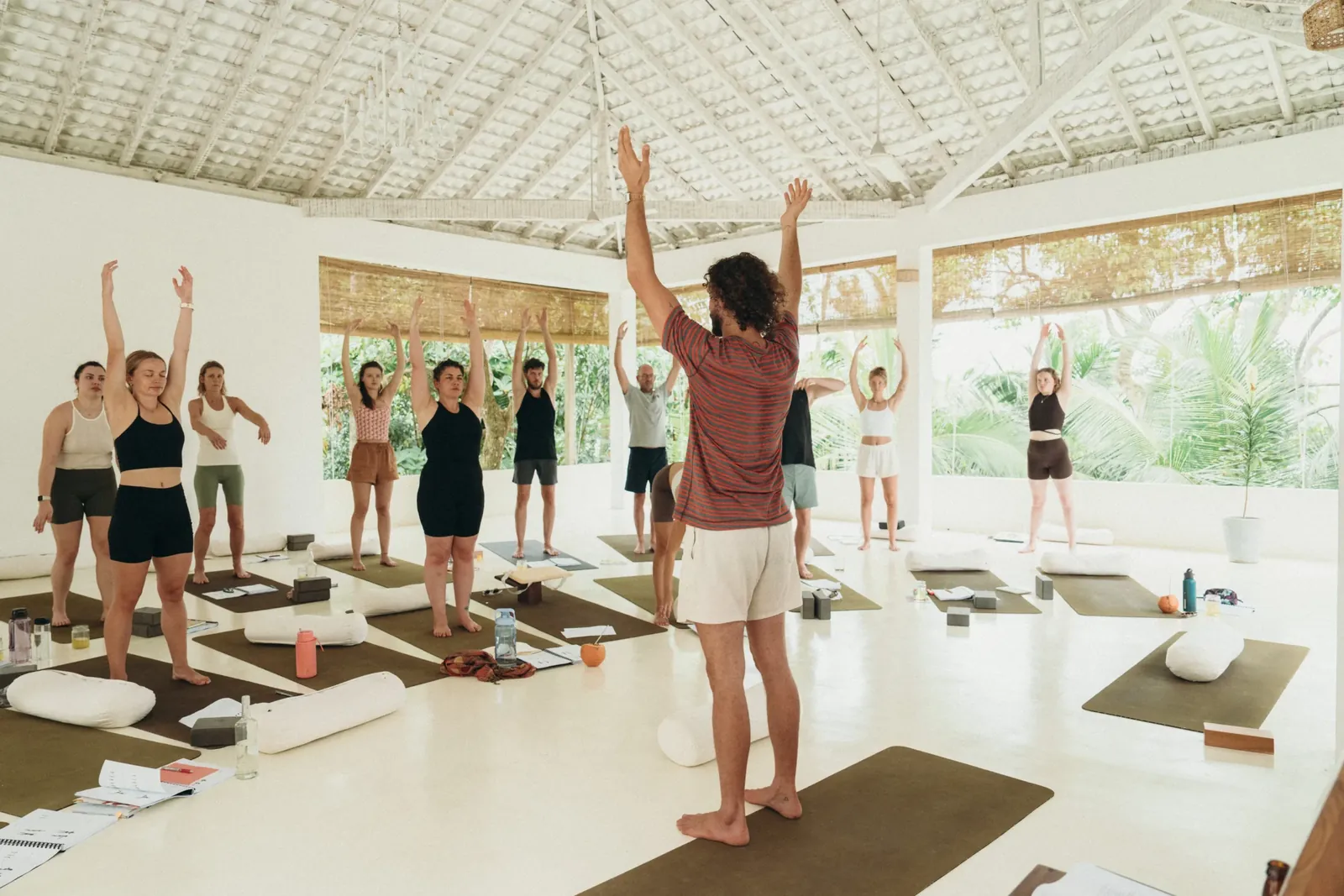
At Lanka Yoga in Sri Lanka, students experience a fully immersive setting surrounded by nature, where daily practice, community living, and focused study become part of the learning journey. The school's approach blends modern movement science with traditional yogic wisdom through Synergy Yoga and dynamic Vinyasa practices.
Step 3: Complete Your 200-Hour Certification
Most full-time immersive trainings take around three weeks, while part-time formats may last several months. Many graduates describe teacher training as one of the most transformative experiences of their lives — not simply because they become certified, but because they deepen their understanding of themselves.
Step 4: Start Teaching
Your first class may feel intimidating. That's completely normal. Many new teachers begin by offering classes to:
- Friends and family
- Local studios
- Community centers
- Gyms
- Retreat spaces
- Online platforms
The goal isn't perfection. It's experience.
Every class helps you refine your communication, sequencing, and ability to respond to students' needs.
Step 5: Continue Learning
The best yoga instructors never stop being students. After gaining experience, many teachers continue their education through:
- 300-hour advanced teacher trainings
- Specialized workshops
- Anatomy courses
- Meditation certifications
- Retreat facilitation programs
- Continuing education events
Yoga Alliance also offers advanced credential pathways for teachers who complete additional training and teaching hours.
Do You Need Yoga Alliance Certification?
Technically, no. In many countries, there is no legal requirement to register with Yoga Alliance before teaching yoga. However, many studios and employers prefer instructors who have completed a recognized training program, and Yoga Alliance registration can add credibility, especially if you plan to teach internationally. The most important factor remains the quality of your education and your ability to teach safely and authentically.
How Much Does It Cost to Become a Yoga Instructor?
The investment depends on the training format and location. Generally, you can expect:
| Training Type | Typical Cost |
|---|---|
| Online 200-hour YTT | €1,000–€2,000 |
| In-person local YTT | €2,000–€4,000 |
| Immersive retreat-style YTT | €2,500–€5,000+ |
While price matters, choosing a program based solely on cost can be a mistake. Consider teacher experience, the student-to-teacher ratio, curriculum quality, practical teaching opportunities, and the community and support offered after graduation.
Can You Make a Career as a Yoga Instructor?
Yes, although many teachers combine several income streams. Experienced instructors often teach through a combination of studio classes, private sessions, corporate wellness programs, yoga retreats, teacher trainings, online memberships, and workshops. For many, teaching yoga is not simply a profession — it becomes a lifestyle centered around helping others live healthier, more balanced lives.
Why Many Future Teachers Choose Sri Lanka
Training abroad offers something difficult to recreate at home: complete immersion. Away from everyday distractions, students can fully dedicate themselves to practice, study, and personal growth.
Sri Lanka has become one of the world's most sought-after yoga destinations thanks to its tropical landscapes, peaceful atmosphere, and growing wellness community. At Lanka Yoga, students combine intensive study with the calming environment of Koggala Lake, where nature, movement, and mindfulness come together to create a truly memorable learning experience.
Frequently Asked Questions
How long does it take to become a yoga instructor?
Most people begin with a 200-hour yoga teacher training, which can take anywhere from three weeks full-time to several months part-time.
Do I need to be very flexible?
No. Great teachers come in all body types and ability levels. Communication and understanding are far more important than advanced poses.
Can beginners join a yoga teacher training?
Many schools accept dedicated practitioners without years of experience, although having a consistent personal practice is highly recommended.
Is Yoga Alliance certification mandatory?
No, but many studios and employers value the additional credibility it provides.
What style of yoga should I teach?
The best style is one that genuinely resonates with you. Many modern teachers combine traditional philosophy with functional movement approaches such as Synergy Yoga and Vinyasa.
Final Thoughts
Becoming a yoga instructor is about much more than earning a certificate. It's a journey of self-discovery, continuous learning, and service to others. Whether your dream is to teach local classes, host retreats, or simply deepen your own practice, the first step is choosing a teacher training that aligns with your values and supports your growth.
The right training won't just teach you how to guide a yoga class. It will help you become the kind of teacher people trust, remember, and return to for years to come.